

For months (maybe even years), you’ve been dutifully making minimum payments on your credit cards, watching your balance barely budge despite throwing hundreds of dollars at it each month. You tell yourself you’re being responsible, that you’re handling it on your own. But deep down, you know the math isn’t working. The interest charges keep piling up faster than you can pay them down.
This is the exact situation thousands of people found themselves in before reaching out to LendWyse. What they learned surprised them: what they thought was “handling it responsibly” was actually the most expensive, longest path to becoming debt-free.
Let’s explore what real customers discovered when they finally compared their DIY approach to structured debt consolidation.
Table Of Contents:
- The Reality Check: What “Handling It Yourself” Actually Costs
- What People Learn About Interest
- The “I’m Handling It” Illusion
- What Happens When Life Interrupts Your DIY Plan
- The Credit Score Misconception
- What Makes People Finally Choose Consolidation
- The Comparison That Changes Minds
- What Customers Wish They’d Known Sooner
- When DIY Makes Sense (Rare Cases)
- The Consolidation Decision Framework
- The Role of Professional Guidance
- The Emotional Journey: From Resistance to Relief
- The Bottom Line: Smart Strategy vs. Stubborn Struggle
- Ready to Stop Treading Water?
The Reality Check: What “Handling It Yourself” Actually Costs
One LendWyse customer captured the frustration perfectly: “Trying to budget got worse & worse the past few years, and I lost a lot of sleep trying to figure things out. I was making ALL of my payments, every month, on time, but the interest being added back each month was keeping me in a never-ending cycle.”
This is the hidden truth about paying credit cards yourself: you can do everything “right” — never miss a payment, stay within budget, live frugally — and still be losing the battle against compound interest.

The typical scenario:
- $15,000 in credit card debt at 22% APR
- Minimum payments of $450/month
- Timeline to payoff: 15-20 years
- Total paid: $30,000+ (double your original debt)
Most people don’t realize they’re on a 15-20 year repayment plan when they choose the “do it yourself” route. They think they’re a few years away from freedom. The reality is devastating.
What People Learn About Interest
#1: Your Payment Mostly Goes to Interest, Not Principal
Before consolidation, most customers don’t realize how little of their monthly payment actually reduces their debt. On a $10,000 balance at 24% APR, roughly $200 of your $300 minimum payment goes straight to interest. You’re paying $300 to reduce your balance by only $100.
After consolidating with a personal loan at 12% APR, that same $300 payment might split as $100 to interest and $200 to principal, literally doubling your progress toward debt freedom.
What customers realized: The “responsible” approach of paying cards yourself is actually financially irresponsible when interest rates are consuming 60-80% of every payment. Consolidation isn’t admitting defeat; it’s refusing to donate thousands of unnecessary dollars to credit card companies.
#2: The Psychological Toll of Never Seeing Progress
Jorge expressed the relief many feel: “Speaking to Kevin today felt like a great relief to taking the next step into setting me up in a plan to reduce and finalize my accumulated dept. I can’t wait for these next 3 years to go by and be debt free!”
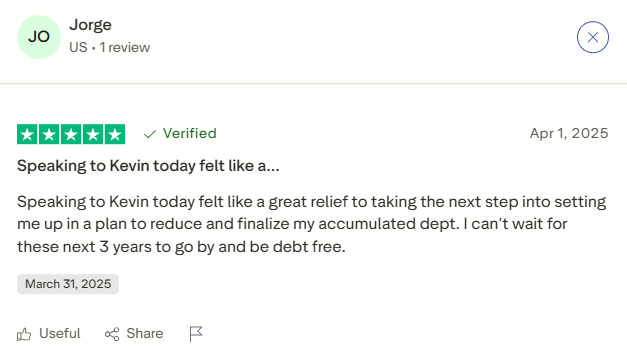
Notice the clarity: “3 years to be debt-free.” Before consolidation, most people can’t answer the question “when will you be debt-free?” because they don’t actually know. They’re hoping things will somehow work out, but there’s no concrete finish line.
The psychological difference:
- Paying yourself: Vague timeline, constant stress, feeling of being trapped indefinitely
- Consolidation: Exact payoff date, visible progress, countdown to freedom
Mother of the groom captured this relief: “Stress is horrible and after everything was explained the instant relief and looking forward to a resolution has made a lighter load.”
That “instant relief” comes from finally seeing a realistic path forward instead of the endless treadmill of minimum payments.
The “I’m Handling It” Illusion
Many people reach out to LendWyse believing they’re managing their debt because they’re making all their payments on time. What they discover is that “managing” and “eliminating” are vastly different things.
David North’s experience is telling: “Well, I was a little skeptical at first, but he made a lot of sense in what he was saying as far as me trying to pay two cards off and going with beyond in order to make everything work out very comfortably.”

He was trying to pay cards off himself, but once he saw the actual numbers — how long it would take, how much total interest he’d pay — consolidation “made a lot of sense.”
The wake-up call: Making minimum payments on time doesn’t mean you’re successfully handling debt. It means you’re successfully enriching credit card companies while slowly bankrupting your future.
What Happens When Life Interrupts Your DIY Plan
When you’re juggling multiple credit card payments with varying due dates, interest rates, and minimum amounts, your debt repayment plan is fragile. Any disruption, like an unexpected car repair, medical bill, or reduced hours at work, can cause the entire system to collapse.
One customer shared: “Trying to budget got worse & worse the past few years…I was making ALL of my payments, every month, on time — but the interest being added back each month was keeping me in a never-ending cycle.”
Notice: even when doing everything right, budgets deteriorate over time because you’re fighting an uphill battle against compounding interest.
With consolidation:
- One fixed payment (easier to budget)
- Lower interest rate (more money to the principal)
- Clear timeline (psychological stability)
- Room to breathe when emergencies arise
Tamaira Barnes-Hart’s joy captures the transformation: “I can’t even thank you enough for taking care of my debt….I should have done this along time ago. I’m so happy, this made my day!!!!”
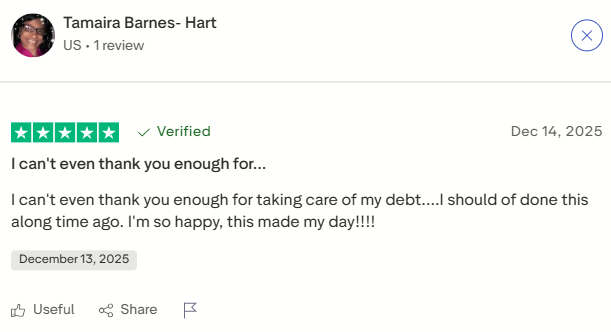 That “should have done this long ago” is the universal refrain of people who spent years in the minimum payment trap thinking they were handling things responsibly.
The Credit Score Misconception
Many people avoid debt consolidation because they believe paying cards themselves protects their credit score better. What they don’t realize: high credit card balances damage your credit score significantly through credit utilization, even if you’re making payments on time.
The credit utilization factor:
- Using 80% of your available credit tanks your score
- This happens even with a perfect payment history
- Consolidation pays off cards, dropping utilization to 0%
- Result: credit score often improves within months
Darrell learned: “Carmelo was great to work with. He was able to help me understand exactly how the program works because I was under the impression that going this route was bad.”
That “impression that going this route was bad” keeps people trapped in debt for years. Once they understand the actual credit impact, they realize consolidation often helps their score faster than the DIY approach.
The Hidden Costs of “Doing It Yourself”
When comparing debt consolidation to paying cards yourself, most people only consider financial costs. But real customers discovered hidden costs they hadn’t accounted for:
Lost Sleep: One customer mentioned, “I lost a lot of sleep trying to figure things out.”
Relationship Strain: Financial stress is a leading cause of relationship problems. Multiple customers mentioned discussing debt relief with spouses, suggesting the burden affected entire households.
Missed Opportunities: Years spent treading water on credit card debt mean years not saving for retirement, not building emergency funds, not investing in opportunities.
Mental Energy: The cognitive load of managing multiple credit cards, tracking due dates, and worrying about balances. This mental bandwidth could be used for career advancement, family, or personal growth.
What Makes People Finally Choose Consolidation
Based on customer reviews, people finally choose consolidation over continuing to pay cards themselves when they realize:
1. The Timeline Is Unacceptable
Jorge wanted to know: “I can’t wait for these next 3 years to go by and be debt-free!”
Three years is manageable. Fifteen years is unacceptable. Once people do the math on their DIY timeline, consolidation becomes obvious.
2. They’re Not Actually Making Progress
The customer who noted “the interest being added back each month was keeping me in a never-ending cycle” reached the breaking point when they realized months of payments hadn’t meaningfully reduced their balance.
3. The Stress Became Unbearable
Multiple reviews mention the immediate “relief” felt after understanding their consolidation options. This suggests many people had been carrying enormous stress trying to handle debt alone.
4. They Discovered It Wasn’t Admitting Failure
Darrell thought “going this route was bad” until he understood the program. Many people avoid consolidation because they view it as a failure rather than a smart financial strategy.
Once representatives explained the math, customers realized continuing the DIY approach (knowing you’ll pay double your debt over 15+ years) is the real failure. Consolidation is the intelligent response.
The Comparison That Changes Minds
Here’s what LendWyse customers learned when they compared their current approach to consolidation:
Paying Credit Cards Yourself:
- Timeline: 15-20 years (often unknown to borrower)
- Total paid: 2-3x original debt
- Monthly payment: Scattered across multiple cards
- Interest rate: 18-29% average
- Progress visibility: Minimal; feels endless
- Psychological state: Stressed, trapped, hopeless
- Flexibility: Fragile; any emergency derails progress
- Credit impact: High utilization damages score despite on-time payments
Debt Consolidation:
- Timeline: 3-5 years (clearly defined)
- Total paid: 1.3-1.5x original debt
- Monthly payment: Single fixed payment
- Interest rate: 8-15% for qualified borrowers
- Progress visibility: Clear countdown to debt-freedom
- Psychological state: Relief, hope, empowered
- Flexibility: Single payment is easier to manage
- Credit impact: Lower utilization often improves your score faster
When customers saw this comparison laid out with their actual numbers, the choice became obvious.
What Customers Wish They’d Known Sooner
1. Time Lost Can’t Be Recovered
Every year spent on the minimum payment treadmill is a year of unnecessary interest charges and delayed financial freedom. Jorge’s excitement about being “debt-free” in 3 years shows the opportunity cost of waiting.
2. The Interest Adds Up Faster Than You Think
The customer who noted interest being “added back each month,” keeping them in a “never-ending cycle,” didn’t realize how aggressively compound interest works against you until they did the full calculation.
3. “Handling It Yourself” Isn’t the Badge of Honor You Think
Many people pride themselves on not seeking help, viewing it as personal responsibility. What they learn: true responsibility means choosing the most effective path to debt freedom, even if that means getting help.
4. The Emotional Relief Has Financial Value
Multiple customers mention immediate “relief” and feeling a “lighter load.” This psychological benefit improves decision-making, work performance, and relationships, creating value that goes beyond the interest savings.
When DIY Makes Sense (Rare Cases)
To maintain credibility, it’s important to acknowledge when paying cards yourself might be the better choice:
Consider the DIY approach if:
- You can pay off debt in under 12 months with focused effort
- Your interest rates are already low (under 12%)
- You have excellent spending discipline and won’t reaccumulate debt
- Your credit is too damaged to qualify for meaningful consolidation rates
But be honest: most people in these situations would have already paid off their debt. If you’ve been “handling it yourself” for years without meaningful progress, it’s time to admit the approach isn’t working.
The Consolidation Decision Framework
Based on what LendWyse customers learned, ask yourself:
1. “Do I know exactly when I’ll be debt-free at my current pace?”
If you can’t answer this with a specific month and year, you’re not actually on a path — you’re just hoping things work out.
2. “What percentage of my payments go to interest vs. principal?”
If you don’t know this number, you don’t know if you’re making progress or donating money to credit card companies.
3. “How much total will I pay if I continue my current approach?”
Run the calculation. If the answer is 2-3x your original debt, you’re choosing the most expensive option available.
4. “How long have I been ‘handling it myself’ without meaningful progress?”
If the answer is more than 12 months, your approach isn’t working—no matter how responsible you feel making those payments.
5. “What would I do with the money I’d save through consolidation?”
Jorge’s excitement about being debt-free in 3 years suggests he has plans beyond just escaping debt. What could you do with the thousands saved in interest?
The Role of Professional Guidance
Beyond just the financial benefits of consolidation, LendWyse customers consistently mentioned the value of professional guidance:
Grace D shared: “Kameel was the reason I was even open about this company. Not only did he take the time to help me understand the whole process, he was very kind about it. His expertise was obviously on point and there were no questions he was unable to answer.”
What professional guidance provides:
- Clarity: Understanding your actual timeline and total costs
- Options: Learning about solutions you didn’t know existed
- Reality Check: Seeing how your “handling it” approach actually pencils out
- Accountability: Having someone invested in your success
- Expertise: Avoiding costly mistakes through informed decisions
When you’re paying cards yourself, you’re navigating complex financial decisions alone, possibly making expensive mistakes without realizing it. Professional guidance catches these blind spots.
The Emotional Journey: From Resistance to Relief
The customer experience follows a remarkably consistent pattern:
Stage 1: Resistance/Skepticism
David North: “Well, I was a little skeptical at first…”
Stage 2: Understanding the Reality
David North continued: “…but he made a lot of sense in what he was saying as far as me trying to pay two cards off…”
Stage 3: Relief/Hope
Jorge: “Speaking to Kevin today felt like a great relief to taking the next step…”
Stage 4: Clarity About Timeline
Jorge: “I can’t wait for these next 3 years to go by and be debt-free!”
Stage 5: Regret About Waiting
Tamaira Barnes-Hart: “I should have done this along time ago. I’m so happy!”
This journey from skepticism to relief to excitement happens when people finally understand the comparison between their DIY approach and consolidation with actual numbers.
The Bottom Line: Smart Strategy vs. Stubborn Struggle
The comparison between debt consolidation and paying credit cards yourself isn’t about weakness vs. strength or responsibility vs. irresponsibility. It’s about smart strategy vs. stubborn struggle.
Paying credit cards yourself might feel responsible:
- You’re making all payments on time
- You’re not “giving up” or seeking help
- You’re being disciplined with spending
But the numbers tell a different story:
- You’re on a 15-20 year timeline you probably don’t realize
- You’re paying 2-3x your original debt in total
- You’re donating thousands in unnecessary interest
- You’re carrying stress and anxiety for years longer than necessary
Debt consolidation is the truly responsible choice when:
- It cuts your timeline from 15+ years to 3-5 years
- It saves you thousands in total interest paid
- It provides clarity and psychological relief
- It frees up mental energy and emotional bandwidth
- It gets you to financial freedom while you still have decades to build wealth
As customer after customer discovered, what they thought was responsibility was actually the most expensive, longest, and most stressful path to debt freedom.
Ready to Stop Treading Water?
If you’ve been “handling it yourself” for months or years without meaningful progress, it’s time to compare your actual numbers to what consolidation could provide.
LendWyse customers discovered:
- Clear timelines instead of endless treadmills
- Thousands saved in total interest paid
- Immediate psychological relief from having a plan
- Single fixed payments easier to manage than multiple cards
- Actual progress toward debt freedom, not just treading water
Don’t wait years like other customers did before learning this lesson.
Get Your Free Debt Analysis at LendWyse.com
See your actual timeline, total costs, and potential savings with a side-by-side comparison. Within one conversation, you’ll understand whether continuing to pay cards yourself is responsible financial management or a stubborn struggle that’s costing you thousands.
The relief, clarity, and hope that customers describe start with understanding your real options. Stop guessing. Get the numbers. Make an informed choice about the fastest, least expensive path to financial freedom.