

Getting approved for a debt consolidation loan often feels like a hurdle, but the right preparation changes everything.
Most delays in the lending process happen because applicants are missing a specific piece of paper or digital file.
Lenders want to lend you money. They just need to verify that you are who you say you are and that you can afford the new monthly payment. When you organize your financial life before you apply, you move from a maybe to a yes much faster.
A debt consolidation loan is a powerful tool for regaining control over your finances. It combines multiple balances from high-interest credit cards into a single personal loan. The goal is often a lower interest rate or a more manageable schedule.
However, a lender cannot issue a debt consolidation loan on your word alone. They require evidence. This article outlines the documents needed for debt consolidation so you can submit your loan application with confidence.
Proof of Identity and Residence

Every financial institution must follow strict “Know Your Customer” laws. These regulations prevent fraud and money laundering.
Before a lender discusses interest rates or loan term options for a debt consolidation loan, they must confirm your identity. This is the most basic step, but errors here cause immediate rejection.
You typically need two forms of identification.
The primary form of ID must be government-issued and current. A driver’s license is the most common choice. If you do not drive, a state ID card or a passport works just as well.
Lenders look for a clear photo and a name that matches your application exactly. If your credit report lists you as “Robert,” do not apply as “Bob” unless your ID lists both.
Consistency matters.
You should also be prepared to provide your Social Security number. While you might not hand over the physical card, the number is mandatory for the lender to pull your credit score and history.
Proof of residence is the second part of this verification. Lenders need to know where you live to determine eligibility, as some personal loans are not available in every state.
A driver’s license often suffices if the address is current. If you recently moved, you will need a utility bill, a lease agreement, or a bank statement dated within the last three months. This document connects you physically to the address on your application.
- Government-issued photo ID is mandatory for all applications
- Your name on the application must match your ID exactly
- Proof of residence requires a recent utility bill or lease
Verifying Income and Employment
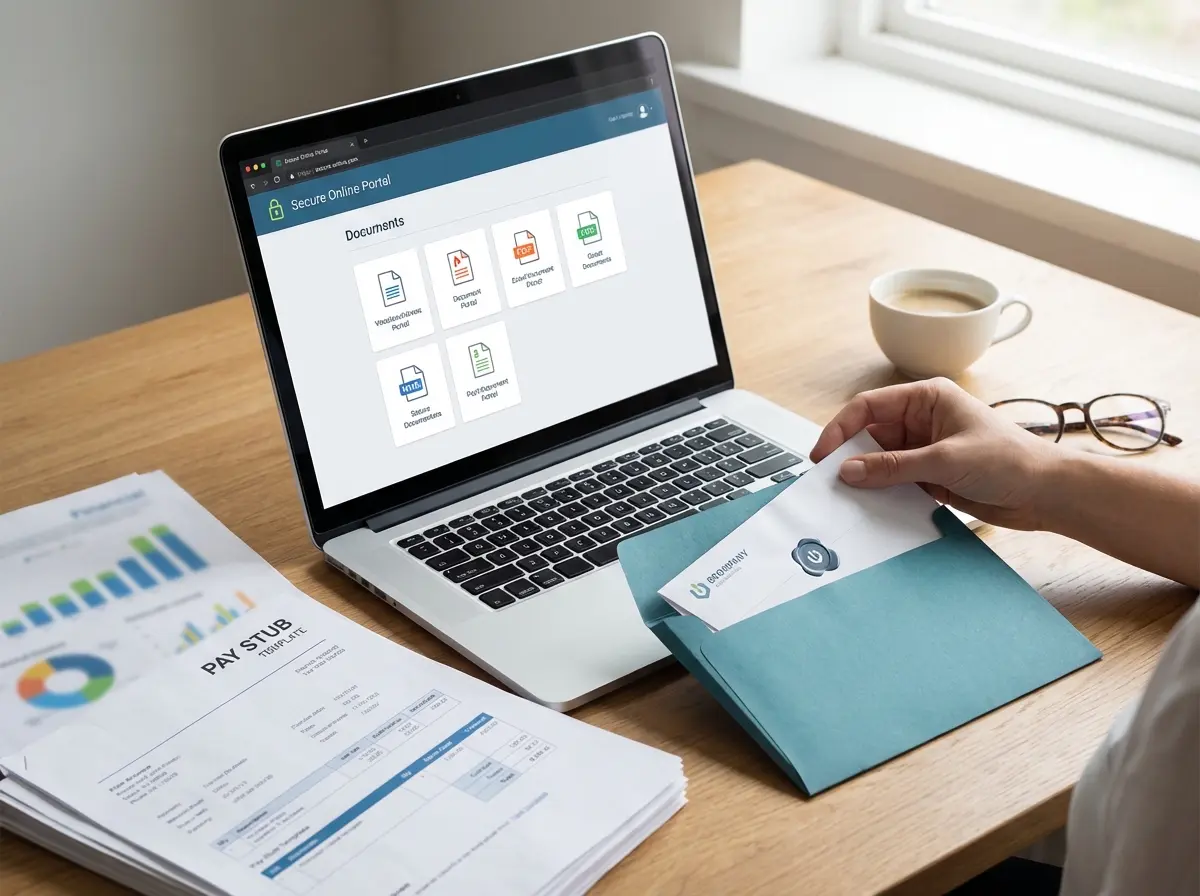
Your ability to repay the consolidation loan is the lender’s primary concern. They use a metric called the debt-to-income ratio (DTI) to assess risk. To calculate this, they need accurate proof of what you earn.
The documents required here depend heavily on your employment status. If you work a standard job, the process is straightforward. If you run a small business, it requires more effort.
For traditional employees, recent pay stubs are the gold standard. Lenders usually ask for the two most recent pay periods. These stubs show your gross income, taxes, and net pay. They also verify that you are currently employed.
You may also need to provide W-2 forms from the last two years. This demonstrates income stability over time. A personal loan underwriter wants to see that your income is consistent enough to handle the monthly payment for the duration of the loan.
Self-employed individuals face stricter scrutiny. Because you do not have a standard employer, you must prove your income through tax returns.
Expect to provide full tax returns for the last two years, including all schedules. 1099 forms are helpful, but the tax return shows the full picture of your profit and loss.
You might also need three to six months of bank statements from your business bank account to show cash flow. This proves that your business generates enough revenue to support your personal debt consolidation goals.
If you receive bonuses or commissions, provide documentation for these as well. This extra income can lower your DTI ratio and potentially help you qualify for the lowest rate.
Alimony, Child Support, and Retirement
Income is not limited to a salary. If you receive alimony, child support, or pension payments, you can use these to qualify for a debt consolidation loan.
However, you must provide legal documentation. Court orders or divorce decrees outlining the payment amount and duration are necessary.
For retirement income, benefit verification letters or 1099-R forms act as proof.
You can also use statements from wealth management accounts if you draw regular distributions.
The more income streams you can document, the better your chances of approval for a consolidation loan.
Current Debt Documentation
The purpose of a debt consolidation loan is to pay off other liabilities. Therefore, the lender needs to know exactly what you owe.
You should gather statements for every credit card and loan you intend to pay off. This includes the account number, the current balance, and the payment address for each creditor. If you have a stack of credit cards, create a summary list to keep everything organized.
Lenders use this information in two ways.
First, they verify the total amount of money you need. If you have $15,000 in credit card debt and a $5,000 medical bill, you need a debt consolidation loan of at least $20,000.
Second, some lenders offer a “direct pay” service. This means they send the loan proceeds directly to your creditors rather than to your bank account.
To do this, they need precise account numbers. This method is often preferred because it guarantees the money is used for debt consolidation.
Be transparent about all your debts. Lenders will see your open accounts on your credit report anyway. Trying to hide a maxed-out credit card will only hurt your credibility.
If you are including student loans or an auto loan in the debt consolidation, have those statements ready as well. However, keep in mind that secured debts like car loans are rarely included in unsecured consolidation loans because the interest rates on personal loans are often higher than auto rates.
If you are looking to transfer credit card balances, knowing your exact payoff amount is vital. Interest accrues daily on a credit card. The balance you see on your statement today might be lower than the payoff amount ten days from now.
Call your credit card issuer to get a 10-day or 30-day payoff quote. This prevents you from leaving a small, forgotten balance on the old credit card after the consolidation loan pays it out.
- Gather statements for every credit card you plan to pay off
- Obtain 10-day payoff quotes to account for daily interest
- Direct pay lenders require exact account numbers and payment addresses
Banking and Disbursement Details
Once your debt consolidation loan is approved, the money has to go somewhere. If the lender sends the funds to you, they need your bank account information. This usually means a voided check or a bank statement that clearly shows your account number and routing number.
A checking account is the standard destination for these funds. Using a savings account is possible, but some lenders prefer checking accounts for setting up automatic monthly payments later.
You should also prepare for the repayment phase immediately. Most lenders offer a rate discount (often 0.25% or 0.50%) if you enroll in autopay.
To set this up, you will sign an ACH authorization form. This gives the lender permission to withdraw the monthly payments from your checking account automatically. This ensures you never miss a payment, which protects your credit score.
Having your banking details ready during the application speeds up the funding process. In some cases, you can receive funds by the next business day if everything is in order.
If you are using a balance transfer credit card instead of a personal loan, the documentation is slightly different. You will input the account numbers of the old credit cards directly into the application for the new card.
You do not need a voided check for a balance transfer since no cash is deposited into your account. The new credit issuer handles the payment electronically.
Step-by-Step Preparation Guide
Getting a consolidation loan requires organization. The following steps will help you gather what you need so you can secure the best fixed rate and terms available.
How to Organize Your Documents
Calculate Your Total Liability
Use a debt consolidation calculator or a simple spreadsheet. List every credit card, store card, and loan you want to consolidate. Sum up the total to know exactly how large of a consolidation loan you need.
Create Digital Copies
Scan your ID, pay stubs, and tax returns. Save them as clear PDF files. Most personal loans are processed online, and having clean digital files ready prevents delays during the upload process.
Verify Your Credit Status
Check your credit score before applying for a consolidation loan. This helps you target the right lenders. If your score is high, you can demand the lowest rates. If it is lower, you might need to supply extra documentation to prove stability.
Why Documentation Varies by Lender
Not all debt consolidation loans require the same stack of paper. The amount of documentation usually correlates with your credit score and the size of the consolidation loan.
If you have an excellent credit history (750+) and are borrowing a small amount, some lenders might automate the income verification. They can link directly to your bank account or payroll provider to verify income instantly.
In these cases, you might not need to upload a single PDF.
However, if you have a lower credit score or a thin credit file, the lender will perform a manual review. This is where the documents become critical. They need to see the physical pay stubs and bank statements to build a case for your approval.
Similarly, credit unions often require more documentation than online fintech lenders, but they might offer better terms on personal loans. A bank that is a member FDIC will also have strict compliance rules that mandate thorough documentation.
Using a loan calculator before you apply helps you set expectations. If the consolidation loan calculator shows that your new monthly payment will take up 40% of your income, you should expect the lender to ask for extra proof of financial reserves, such as savings accounts or investment portfolios. They want to know you have a safety net.
Managing Multiple Credit Cards
Consolidating credit card debt is the most common reason people seek personal loans. When you have five or six credit cards, the paperwork can get messy. It is helpful to organize your credit cards by interest rate.
Prioritize paying off the card with the highest APR first. This strategy is essential if your consolidation loan approval amount is lower than your total debt. You want to save money by eliminating the most expensive card debt first.
If you are using a balance transfer credit card, pay attention to the transfer fees. While a personal loan might have an origination fee, a balance transfer credit card usually charges 3% to 5% of the amount transferred. You will need to calculate if the 0% introductory period on the balance transfer credit is worth the upfront fee.
A personal loan calculator can help you compare the total cost of a consolidation loan versus a balance transfer strategy.
Do not close your old credit cards immediately after paying them off with a consolidation loan. Closing old accounts reduces your total available credit and shortens your credit history, which can drop your credit score.
Business Credit Cards and Personal Loans
Entrepreneurs often mix personal and business expenses. If you have business credit cards that you want to consolidate with a personal loan, be careful. Some lenders restrict the use of personal loans for business purposes.
You must read the lender’s policy or ask a representative. If the debt is on a business credit line, it might not report to your personal credit history. Moving that debt to a personal consolidation loan will put it on your personal credit report.
This could lower your score initially by increasing your credit utilization ratio.
Conversely, using business credit products to consolidate personal debt is generally prohibited by card issuers.
Final Thoughts on Loan Preparation
Applying for a debt consolidation loan is a strategic move to improve your financial health. It simplifies your life by turning multiple monthly payments into one. It can also reduce the interest you pay on credit card debt.
However, the success of your application depends on your ability to prove your financial stability. By gathering your ID, income verification, and debt statements ahead of time, you present yourself as a low-risk borrower.
Remember that lenders want to approve consolidation loans. It is their business. When you provide clear, organized documentation, you make their job easier. This often leads to faster approvals and sometimes even better terms.
Whether you are looking for personal loans to wipe out credit card debt or seeking to restructure student loans, the documentation remains the key to unlocking these financial tools.
Take the time to prepare today, and you will be ready to secure the debt consolidation loan that fits your budget.
Not all loans are the same — interest rates and terms can vary a lot. LendWyse gives you a clear side-by-side view, so you know exactly which option is the best fit for you.