

Getting denied on your personal loan application can feel like a financial dead end, leaving you wondering, “so my personal loan denied, what next?”
The rejection stings especially when you were counting on that loan to consolidate high-interest credit card debt or handle an urgent expense. But here’s what most people don’t realize: a loan denial isn’t the end of your debt relief options. It’s actually a redirection toward solutions that might fit your situation better than a traditional personal loan ever would.
The key is understanding why you were denied and what alternatives exist. Maybe your credit score didn’t meet the lender’s threshold, or your debt-to-income ratio was too high. Perhaps your employment history raised concerns, or you simply applied to lenders whose criteria didn’t match your profile.
Each rejection reason points toward specific next steps, and often toward debt relief programs that don’t rely as heavily on the credit score or income requirements that blocked your loan approval.
Let’s explore exactly what to do after a personal loan denial, from understanding the common reasons for rejection to discovering alternative pathways that can still get you to debt freedom, sometimes faster and more affordably than traditional personal loans would have.
Personal Loan Denied, What Next? Understanding the Adverse Action Notice

Federal law requires lenders to tell you exactly why they turned down your application. This decline notice comes in a document called an adverse action notice, which you should receive within 7 to 10 days of the decision.
The Equal Credit Opportunity Act mandates this transparency to prevent discrimination and help consumers understand their financial standing. This letter is your most valuable tool for fixing the problem.
The notice will list the specific factors that influenced the negative decision, such as “insufficient income” or “delinquent past credit obligations.” It will also provide the specific credit score the lender used and the agency that supplied the report.
You should read this document carefully because it removes the guesswork from your recovery plan. If you have not received it yet, you can contact the lender directly to request it.
Sometimes the letter might contain vague codes or industry terms that seem confusing at first glance. If the reasons listed are unclear, call the lender’s customer service line for a plain English explanation. They can often provide additional context that the form letter does not cover, giving you a clearer target for improvement.
Common Personal Loan Denial Reasons and Lender Criteria
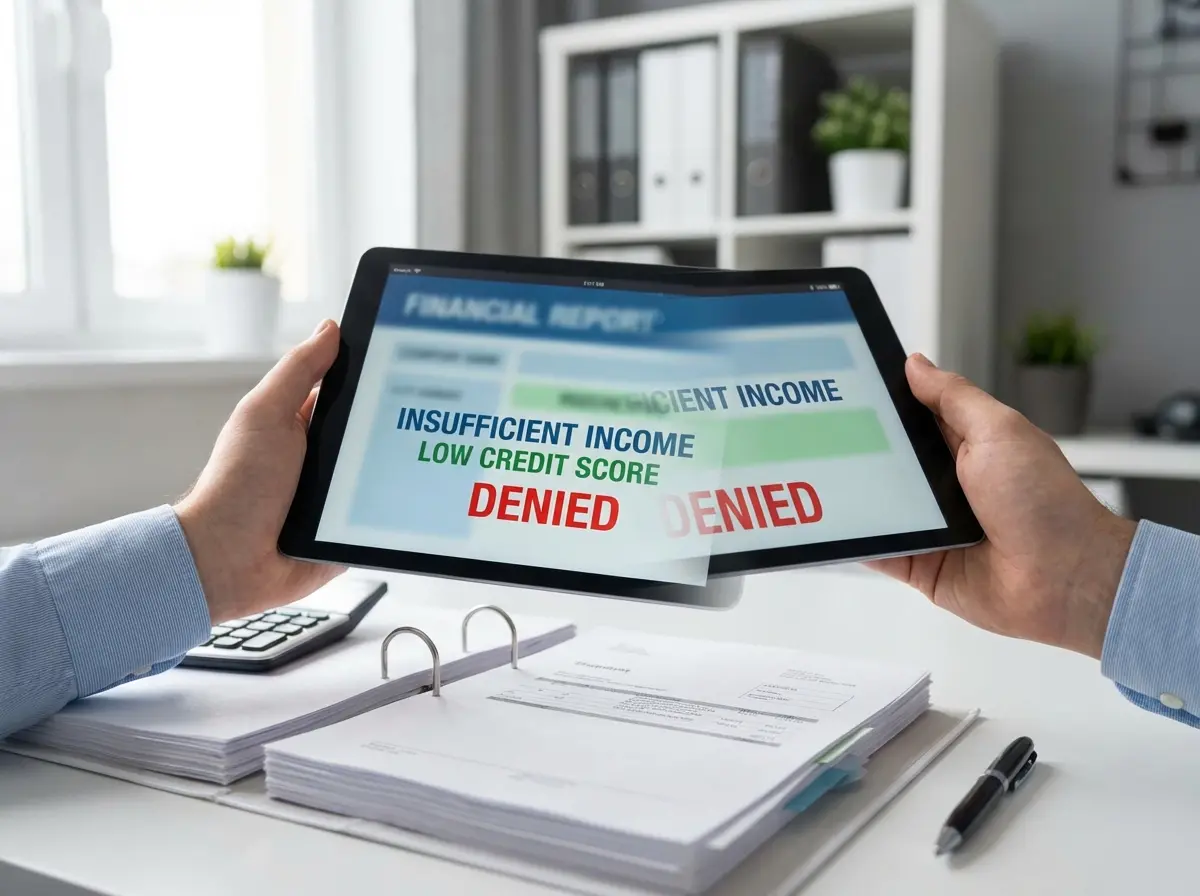
Lenders look at your financial life through a risk assessment lens to predict if you will pay them back. While every bank has different standards, most denials stem from a few core issues regarding income or credit history. Understanding these categories helps you pinpoint where your application fell short and how to meet lender criteria in the future.
Credit Score Requirements
Your credit score acts as a quick snapshot of your reliability as a borrower. Many lenders have strict credit score requirements, and if you fall even one point below the minimum, the system triggers an automatic denial.
This score fluctuates based on payment history, credit utilization, and the length of your credit history. A recent late payment or a maxed-out credit card can drop your credit score for personal loan applications significantly overnight.
High Debt-to-Income Ratio and Personal Loan Approval Odds
Lenders worry that if you already owe too much money, you will struggle to make payments on a new loan. They calculate your debt-to-income ratio (DTI) by dividing your monthly debt payments by your gross monthly income. If this percentage exceeds a certain threshold, usually around 36% to 43%, lenders view you as a high-risk borrower.
Even with a perfect credit score, a high DTI can result in immediate rejection and lower your personal loan approval odds.
Insufficient Income and Other Common Loan Denial Reasons
Banks want to see a steady, predictable stream of money entering your bank account every month. If you are self-employed, have gaps in your employment, or recently switched jobs, the lender might question your income stability.
Additionally, some loans have minimum income requirements that you must meet regardless of your credit score, making income a primary factor among loan denial reasons.
- Lenders must send an Adverse Action Notice explaining the specific reasons for your denial.
- A high Debt-to-Income (DTI) ratio can cause rejection even if you have a high credit score.
- Income stability is just as important to lenders as your payment history.
Immediate Steps After a Personal Loan Rejection: Reapplying for a Loan
You need to act methodically once you receive the bad news. Rushing into another application without fixing the underlying issues usually leads to another loan application rejection. Follow this specific process to organize your finances and prepare for a better outcome when reapplying for a loan.
How to Respond to a Personal Loan Denial
Review the Adverse Action Notice
Read the letter thoroughly to identify the primary reason for rejection. Note which credit bureau provided the report so you know which data to check.
Request Your Free Credit Report
You are legally entitled to a free copy of your credit report within 60 days of a denial. Order it immediately to look for credit report errors or fraudulent activity.
Contact the Lender for Reconsideration
Call the lender and ask if they offer a manual review or “reconsideration” process. Explain any positive factors that the computer algorithm might have missed.
Analyzing Your Debt-to-Income Ratio
Your debt-to-income ratio (DTI) is often the silent killer of loan applications. A lender might see that you pay your bills on time, but if you already spend a large portion of your paycheck on debt, they will assume you cannot handle more. Calculating this number yourself lets you see your finances through the lender’s eyes and improves your personal loan approval chances.
To calculate your DTI, add up all your monthly debt obligations, including rent or mortgage, car loans, student loans, and credit card minimums. Divide that total by your gross monthly income (your income before taxes).
For example, if you pay $2,000 in debts and earn $5,000 a month, your DTI is 40%. Most personal loan providers prefer a DTI below 36%, though some will accept up to 43%.
If your calculation shows a high percentage, you must focus on lowering it before reapplying for a loan. You can achieve this by paying off small balances to eliminate monthly payments or by increasing your income through a side gig.
Even a small reduction in your monthly obligations can drop your DTI enough to move you from the “reject” pile to the “approve” pile.
Lenders usually do not count expenses like groceries, utilities, or gas in your DTI calculation. Focus only on debt obligations found on your credit report plus your housing costs.
Fixing Credit Report Errors to Improve Credit Scores
Credit report errors are surprisingly common and can single-handedly ruin your chances of approval. A study by the FTC found that one in five people has an error on at least one of their credit reports. You might find a bill you already paid marked as “due” or an account that does not belong to you at all.
Scan your report for any negative marks that look incorrect. If you find an error, file a dispute immediately with the credit bureau (Equifax, Experian, or TransUnion) and the lender who reported it. They must investigate your claim within 30 days and remove the information if they cannot verify it. This process costs nothing and can improve credit score metrics quickly.
If the negative marks are accurate, you need to start damage control. Bring any past-due accounts current immediately to stop further damage to your score. Then, focus on paying down credit card balances to lower your credit utilization ratio, which accounts for 30% of your FICO score.
Keeping your card balances below 30% of their limits generally results in a score increase over time.
Alternative Funding Options After a Personal Loan Denial
Sometimes you need funds urgently and cannot wait months to repair your credit score. If a traditional personal loan is not an option right now, other financial products might serve your needs. These alternatives often have different qualification requirements that are easier to meet for borrowers with imperfect credit.
Secured Personal Loans as an Alternative
A secured loan requires you to provide collateral, such as a car, savings account, or certificate of deposit (CD). Because the lender can take this asset if you fail to pay, the risk to them is lower. This significantly increases your approval odds and often results in a lower interest rate compared to unsecured loans.
Credit Union Loans for Better Approval
Credit unions are non-profit organizations that often have more flexible lending standards than big national banks. They may look beyond just your credit score for personal loan decisions and consider your standing as a member of the community.
Some credit unions even offer “Payday Alternative Loans” (PALs) specifically designed for members with lower credit scores who need small amounts of cash quickly.
Co-Signed Loans to Mitigate Risk
If your personal credit profile is the main barrier, adding a co-signer with strong credit can help you get approved. A co-signer agrees to pay the debt if you default, which gives the lender a safety net.
However, you must manage this carefully, as missed payments will damage both your credit score and your co-signer’s score.
Avoid “guaranteed approval” loans or payday lenders. These often carry predatory interest rates exceeding 400% APR and can trap you in a cycle of debt.
- Credit report errors are common; disputing them can improve your score within 30 days.
- Secured loans use collateral to reduce lender risk and increase approval odds.
- Credit unions often have more flexible criteria than large commercial banks.
Moving Forward and Reapplying for a Loan After a Denial
A loan denial is certainly a setback, but it also serves as a useful diagnostic tool for your financial health. By using the adverse action notice to identify your weaknesses, you can focus your energy on the areas that matter most.
Whether you need to dispute an error, pay down a specific credit card balance, or simply wait for your credit age to mature, you now have a clear path of action.
Patience is essential during this process. Credit scores rarely jump overnight, and rushing to apply for new loans can slow down your progress. Take the time to build a stronger profile, lower your debt-to-income ratio, and research lenders who cater to borrowers with your specific financial background.
With a strategic approach and careful planning, you can turn this temporary rejection into a future approval when reapplying for a loan.
Not all loans are the same — interest rates and terms can vary a lot. LendWyse gives you a clear side-by-side view, so you know exactly which option is the best fit for you.