

Securing a personal loan requires careful evaluation of multiple financial factors to protect your long-term financial health and stability. Knowing how to compare personal loan offers side by side is essential for finding the best possible deal for your unique situation and financial goals.
Conducting a thorough personal loan comparison saves you money and prevents unnecessary stress over the long run by ensuring you understand every term and fee associated with your loan offer. In today’s complex financial landscape, taking the time to analyze the fine print can mean the difference between a manageable debt and a significant financial burden.
Are you truly prepared to take on a new financial obligation that could last for several years? Before requesting a single personal loan offer, you must organize your current financial information completely so lenders can evaluate your credit score accurately and fairly. A strong credit score generally opens the door to better personal loans and significantly lower borrowing costs over the life of the debt, potentially saving you thousands in interest. You should also gather recent pay stubs, tax returns, and bank statements to provide a clear picture of your monthly income and expenditure patterns.
You should also review the balances in your primary checking account and savings account to ensure you have sufficient cash flow for upcoming payments. This step helps you understand exactly how much money you can dedicate to a new monthly payment without sacrificing your lifestyle or basic needs. Having adequate funds in your savings accounts provides a vital buffer if emergency expenses arise suddenly while you are repaying your personal loan, preventing you from falling behind on your obligations. Many experts suggest having at least three to six months of expenses saved before taking on additional debt.
Many people use a personal loan to consolidate high-interest credit card debt or manage existing student loans more effectively and efficiently. If you plan to pay off a credit card, tally up your total outstanding balances across all your credit cards first to ensure your loan covers the full amount. You might also want to check your money market accounts and other market accounts to see your total available liquidity before committing to a new loan offer. Understanding your debt-to-income ratio is just as important as checking your savings account balance, as it is a primary factor in lender approval.
Lenders will look at your checking accounts to see consistent income and how you manage your current student loan obligations and other recurring bills. If you have multiple student loans, a personal loan might simplify your life by consolidating them into one payment, but only if the interest rate is lower than what you currently pay. Be prepared to explain any recent large transactions in your checking account, as lenders often look for stability and predictability in your financial behavior. Taking these preparatory steps ensures that when you finally apply, you are doing so from a position of strength and clarity.
- Review your credit score to understand your borrowing power before applying for a personal loan.
- Check your existing checking account and savings accounts to determine your comfortable monthly budget.
- Calculate your total outstanding debts, including student loans and credit cards, to establish the exact loan amount required.
Personal Loan Costs: Understanding the Annual Percentage Rate
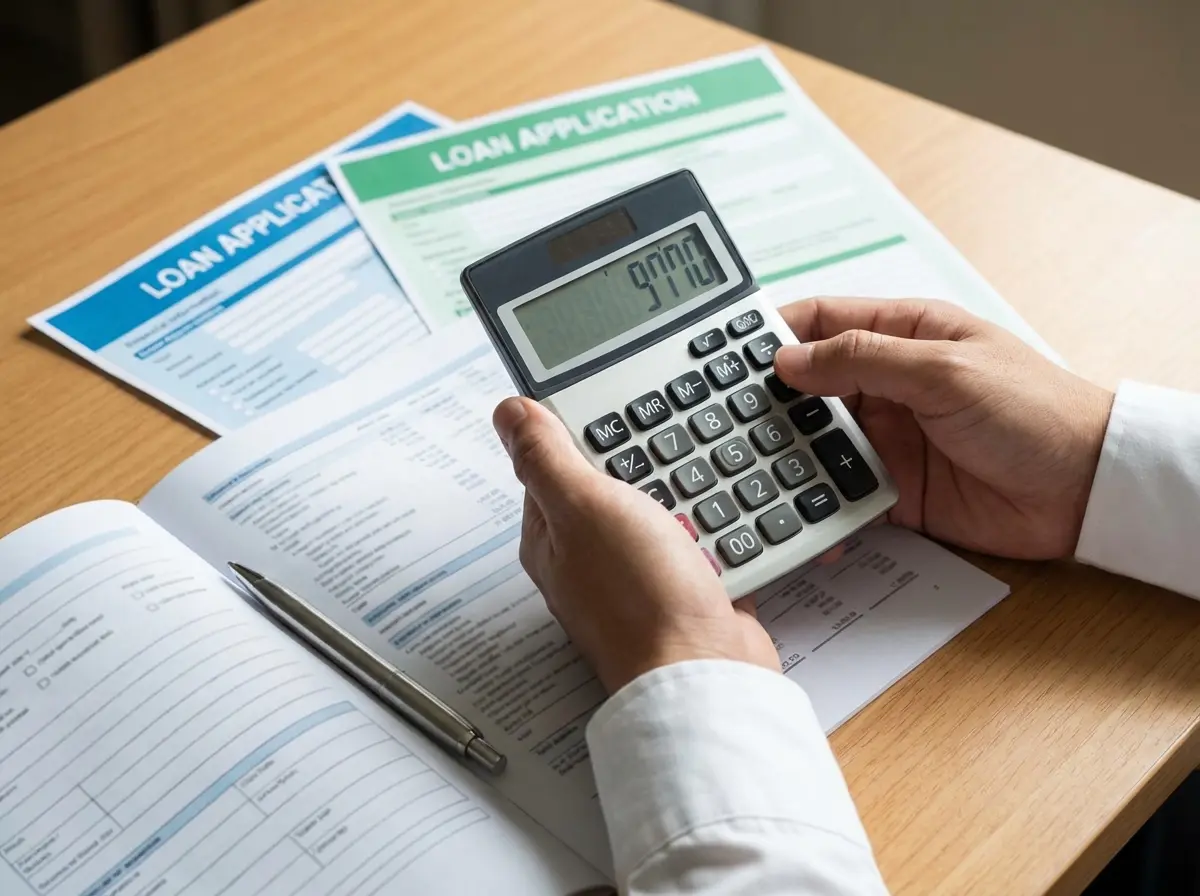
The annual percentage rate represents the true cost of borrowing money over a full year, including all mandatory fees. This figure includes both the base interest rate and any upfront fees the lender charges you for the personal loan, such as administrative or processing costs. Comparing the annual percentage rate across different lenders gives you the most accurate cost measurement for any loan offer you receive, as it standardizes the comparison between different fee structures. Without looking at the APR, you might be misled by a low interest rate that is offset by exorbitant hidden charges.
Some lenders advertise a very low base rate but compensate by charging a high origination fee or significant closing costs that can erode your savings. An origination fee is often deducted directly from your personal loan proceeds before the funds reach your checking account, meaning you receive less than the face value of the loan. You must account for this deduction and any other origination fees to guarantee you receive enough money to cover your planned expenses or debt consolidation needs. If you need exactly $10,000 and the fee is 5%, you must apply for a higher amount to ensure you receive the necessary funds.
Always check if the lender uses the APR or a simple interest rate in their marketing materials for personal loans. The APR provides a much more accurate picture of your true borrowing costs, including closing costs and fees, allowing for a fair comparison between competing offers.
You might notice differences between rates for secured loans and standard unsecured personal loans during your research phase. Secured options require collateral, such as a vehicle or savings account, which lowers the lender risk and typically reduces your personal loan rate significantly. However, most standard personal loans are unsecured, meaning your approval depends entirely on your creditworthiness and history with checking accounts and credit cards. When you compare loans, look at how the interest compounds over time, as daily compounding can result in higher total costs than monthly compounding.
A personal loan with a slightly higher interest rate but no origination fee might actually be cheaper than one with a lower rate and high upfront costs. Always ask for a full breakdown of closing costs before signing any agreement to ensure there are no surprises that could impact your repayment plan. Furthermore, check if the rate is fixed or variable; a fixed rate provides stability, while a variable rate could increase significantly if market conditions change. Understanding these nuances is critical for long-term financial planning and ensuring that your monthly payments remain affordable throughout the entire duration of the loan.
Personal Loan Terms: Evaluating the Loan Term and Structure
The loan term dictates exactly how many months or years you have to repay the borrowed funds for your personal loan. A shorter loan term increases your monthly payment but reduces the total interest you pay overall, making it the more cost-effective choice if you can afford the installments. Conversely, a longer repayment term lowers your monthly payment but increases the total cost of borrowing over time due to the extended period of interest accumulation. Choosing between a three year loan and a five year loan requires a careful analysis of your monthly cash flow and long-term financial objectives.
You must select a loan term that fits comfortably within your current monthly budget constraints without causing undue financial strain. Stretching your finances too thin to secure a shorter personal loan term often leads to missed payments and damaged credit, which can have long-lasting negative consequences. You can use financial calculators to test different scenarios and find the perfect balance for your specific financial situation and risk tolerance. It is often better to choose a slightly longer term with a lower payment and make extra principal payments when you have surplus cash available.
For example, a three year loan requires larger installments than a five year loan for the same amount, which could impact your ability to save for other goals. If you face unexpected expenses, a higher monthly payment might force you to rely on high-interest credit cards, creating a new cycle of debt that is difficult to break. Borrowers must evaluate their job stability and existing obligations, like a student loan or auto loans, before committing to an aggressive repayment schedule that leaves little room for error. Always consider the “worst-case scenario” when deciding on the length of your repayment period.
Be extremely cautious of any loan structure that includes a balloon payment, as these are often designed to catch borrowers off guard. A balloon payment is a large, lump-sum payment due at the end of the loan term, which can be devastating if you haven’t saved enough in your savings account to cover it. Most reputable personal loans feature fully amortized payments, meaning you pay off the balance steadily without a balloon payment at the end. If a lender mentions a balloon structure, it is usually a sign to look elsewhere for more traditional and transparent financing options that prioritize the borrower’s long-term success.
Comparison calculator | How to Compare Personal Loan Offers Side by Side Using a loan comparison calculator
A loan comparison calculator is an essential tool for evaluating multiple offers side by side with mathematical precision. You simply input the loan amount, the annual percentage, and the proposed loan term for each personal loan option you are considering. The comparison calculator tool instantly reveals the total interest costs and the exact monthly payment for each scenario, allowing you to see the long-term impact of each choice. This objective data is far more valuable than marketing slogans or promotional offers that may obscure the true cost of the debt.
When you compare loan choices, the math can become complicated without the right digital tools to assist you. A dedicated loan comparison calculator removes the guesswork and provides clear, objective data for your final decision-making process. You can search for a standard comparison calculator | loan amortization tool to start analyzing your options with precision and confidence. By seeing the total cost of the loan over its entire life, you can make a more informed decision about which offer truly serves your best interests and financial health.
Do not forget to include the origination fee when you enter data into the loan comparison calculator to ensure accuracy. Some tools allow you to input closing costs and other upfront charges to calculate the true cost of the personal loan, providing a comprehensive view of the commitment. This level of detail helps you identify the best personal loan for your specific financial goals, whether you are consolidating student loans or funding a major home renovation project. Using these tools ensures that you are not just looking at the monthly payment, but at the total financial impact of the borrowing decision.
Using a comparison calculator | also allows you to see how extra payments might affect your debt over time. If you receive a bonus and put it toward your personal loan, the calculator can show you how much interest you save and how much sooner you will be debt-free. This is a great way to visualize the benefits of using funds from a money market account to pay down debt faster and improve your overall net worth. Seeing the potential savings in black and white can be a powerful motivator to stay disciplined with your repayment strategy and avoid unnecessary spending.
Step-by-Step Guide to Compare Personal Loan Offers
You should obtain pre-qualification quotes from several different financial institutions to understand your available personal loan options in the current market. This process typically requires a soft credit check, which does not impact your current credit score, allowing you to shop around without penalty. Once you gather at least three quotes, you can begin to compare loans and every personal loan offer objectively using the criteria we have discussed. Taking this systematic approach ensures that you are not rushing into a decision that you might later regret.
How to Compare Multiple Quotes
Gather Multiple Quotes
You need to collect estimates from a traditional bank, an online lender, and a local credit union to see the full range of possibilities. This broad approach helps you find the most competitive personal loan rates available in the current market, as different institutions have different risk appetites.
Analyze the Terms
Review the loan term and the required monthly payment for every single loan offer you receive with a critical eye. You must confirm that the scheduled installments fit comfortably within your monthly household budget and checking account balance, leaving room for savings and emergencies.
Check for Fees
Look closely at the origination fee, closing costs, and any potential commitment fee that might be buried in the fine print. These costs can significantly impact the total amount of money you actually receive in your checking account and the overall cost of the loan.
Spotting Hidden Fees, Closing Costs, and Dangerous Balloon Payment Structures
Lenders often hide costs in the fine print of a personal loan agreement, hoping that borrowers will only focus on the monthly payment. Beyond the standard origination fee, you might encounter a commitment fee, which is a charge for keeping a loan offer available for a specific period while you make up your mind. While not all lenders charge a commitment fee, it is important to ask about it during your comparison process to avoid unexpected out-of-pocket expenses. You should also look for prepayment penalties, which are fees charged if you pay off your loan earlier than scheduled.
Closing costs are another area where expenses can add up quickly and catch you by surprise. While more common in mortgages, some personal loans for large amounts may include closing costs that cover administrative processing, credit report fees, and document preparation. Always ensure that the origination fee and closing costs are clearly disclosed before you provide your debit card information for any processing fees. If a lender is hesitant to provide a full fee schedule, consider it a significant red flag and look for a more transparent financial partner.
As mentioned previously, avoid any personal loan that utilizes a balloon payment structure at all costs. A balloon payment can lead to a dangerous debt cycle where you are forced to take out another personal loan just to pay off the final installment of the first one. Stick to transparent personal loans that offer fixed monthly payments and clear origination fees so you can plan your finances with confidence and peace of mind. Your goal should be to eliminate debt, not to restructure it into a more complex and potentially more expensive format.
Managing Your Personal Loan Funds After Approval
Once you accept a personal loan offer, the lender will typically send the funds via wire transfer to your designated checking account. It is vital to have your checking account details ready and verified to avoid delays in receiving your money when you need it most. Some lenders may also offer to send funds directly to your credit card issuers if you are using the personal loan for debt consolidation, which can simplify the process and ensure the funds are used as intended. This direct-pay option often comes with the added benefit of ensuring you don’t spend the money on other non-essential items.
After the wire transfer is complete, you should see the balance reflected in your checking account within one to three business days, depending on your bank’s processing times. You can then use your debit card or online banking to pay off high-interest credit cards or your student loan as planned. Managing these funds wisely is the key to ensuring the personal loan serves its intended purpose of improving your financial health and reducing your overall interest burden. It is helpful to keep receipts or confirmation numbers for all debts paid off with the loan proceeds for your personal records.
Keep a close eye on your checking account to ensure the first monthly payment is made on time and in full. Many borrowers set up autopay using their debit card or checking account to ensure they never miss a deadline and avoid late fees. This practice not only protects your credit score but often qualifies you for a small interest rate discount on your personal loan, further reducing your costs. Consistent, on-time payments are the most effective way to build a positive credit history and improve your future borrowing options.
Comparing Personal Loans vs. Credit Cards and Student Loans
Before finalizing a personal loan, consider if other borrowing options might be more suitable for your specific needs. For instance, if you have a small expense that you can pay off quickly, a credit card with a 0% introductory APR might be cheaper than a personal loan. However, credit cards often have much higher interest rates once the introductory period ends, making them risky for long-term debt if you cannot pay the balance in full. Always weigh the convenience of a credit card against the structured repayment plan of a personal loan.
If you are looking to fund education, a specific student loan often provides better terms, lower rates, and tax benefits than a general personal loan. Similarly, auto loans are usually cheaper for purchasing a vehicle because the car serves as collateral, reducing the lender’s risk. For entrepreneurs, business loans might offer higher borrowing limits and specialized terms that a standard personal loan cannot match. When you compare loans, look at the total cost of a student loan versus a personal loan over the same period to see which makes more financial sense for your situation.
While a student loan might have lower rates, the repayment flexibility of a personal loan might be more appealing to some borrowers who want more control over their debt. Always weigh the pros and cons of using credit cards, student loans, or auto loans against the simplicity of a single personal loan monthly payment. If you are struggling with a high-balance credit card, a personal loan can provide a clear light at the end of the tunnel with a fixed end date for your debt. Ultimately, the best choice depends on your individual financial circumstances, your credit score, and your long-term goals.
Organizing Your Checking Accounts for Personal Loan Repayment
Successful repayment of a personal loan requires organized checking accounts and a disciplined approach to budgeting. You might consider opening a separate checking account specifically for your loan payments to ensure the money is always available when the due date arrives. This prevents you from accidentally spending your monthly payment funds using your primary debit cards for daily expenses or impulsive purchases. Treating your loan payment as a non-negotiable fixed expense is the best way to stay on track and avoid financial stress.
You should also maintain a healthy balance in your savings account as an emergency fund to cover unexpected life events. If your checking accounts run low due to a job loss or medical emergency, having a savings account or money market accounts to pull from can prevent a missed personal loan payment. Many financial experts recommend keeping at least three months of monthly payments in a savings account for maximum security and peace of mind. This safety net allows you to navigate financial storms without damaging your credit or losing progress on your debt repayment journey.
Using debit cards for automated payments is a convenient way to stay on track and ensure you never miss a due date. However, ensure that your checking accounts are protected from overdraft fees by linking them to a savings account for backup funding. This integrated approach to managing your checking account and savings accounts will make your personal loan journey much smoother and more predictable. Regularly reviewing your bank statements will also help you identify areas where you can cut back spending to accelerate your loan payoff.
Avoiding Common Personal Loan Borrowing Mistakes
One of the biggest mistakes borrowers make is failing to read the privacy policy of the lender before submitting an application. A privacy policy outlines how your personal data is shared and protected, which is crucial when you are providing sensitive information like your checking account number and social security details. Always ensure the lender has a robust privacy policy and clear security protocols before you apply for a personal loan offer. Protecting your identity is just as important as finding a low interest rate in the digital age.
Another common error is ignoring the impact of a balloon payment or high origination fees because you are focused on the immediate monthly payment. Some borrowers are so focused on the monthly payment that they miss the fact that the total cost is inflated by closing costs and interest over a long term. Always use a loan comparison calculator to see the big picture and the total cost of borrowing before committing to any personal loan. Being a savvy borrower means looking at the entire financial commitment, not just the part that fits into your monthly budget today.
Finally, don’t forget to look at your total financial picture, including your money market and market accounts, before taking on new debt. Taking out a personal loan when you have enough in a money market account to cover the expense might not make sense if the loan interest rate is significantly higher than what your savings are earning. Evaluate all your assets, from savings accounts to money market accounts, before deciding to borrow. Sometimes, the best financial move is to use existing assets rather than incurring new debt, provided you maintain an adequate emergency fund for the future.
The Final Personal Loan Review Process
The final review of your personal loan offer should be meticulous and thorough to ensure no details are overlooked. Double-check the annual percentage rate, the origination fee, and the total monthly payment one last time against your original loan comparison calculator results. Ensure that the funds will be delivered via wire transfer to the correct checking account and that you understand the privacy policy of the institution. If anything seems unclear or different from what was initially promised, do not hesitate to ask for clarification before signing the final contract.
If you are consolidating credit cards or a student loan, confirm that the personal loan amount is sufficient to cover the full balances, including any interest that has accrued since your last statement. Once you are satisfied with all the terms and conditions, you can move forward with confidence, knowing you have compared your personal loan offers side by side effectively. This disciplined approach ensures that your personal loan is a tool for financial growth and stability rather than a source of future stress or regret. Remember that you are in control of your financial destiny, and careful comparison is your most powerful tool.
Remember that a personal loan is a significant commitment that will impact your finances for years to come. By using a comparison calculator | and carefully reviewing every loan offer, you are taking a proactive step toward financial freedom. Whether you are managing student loans, auto loans, or business loans, the principles of careful comparison and thorough research always lead to better financial outcomes. Stay focused on your long-term goals, and use the tools and strategies outlined here to secure the best possible terms for your personal loan.