
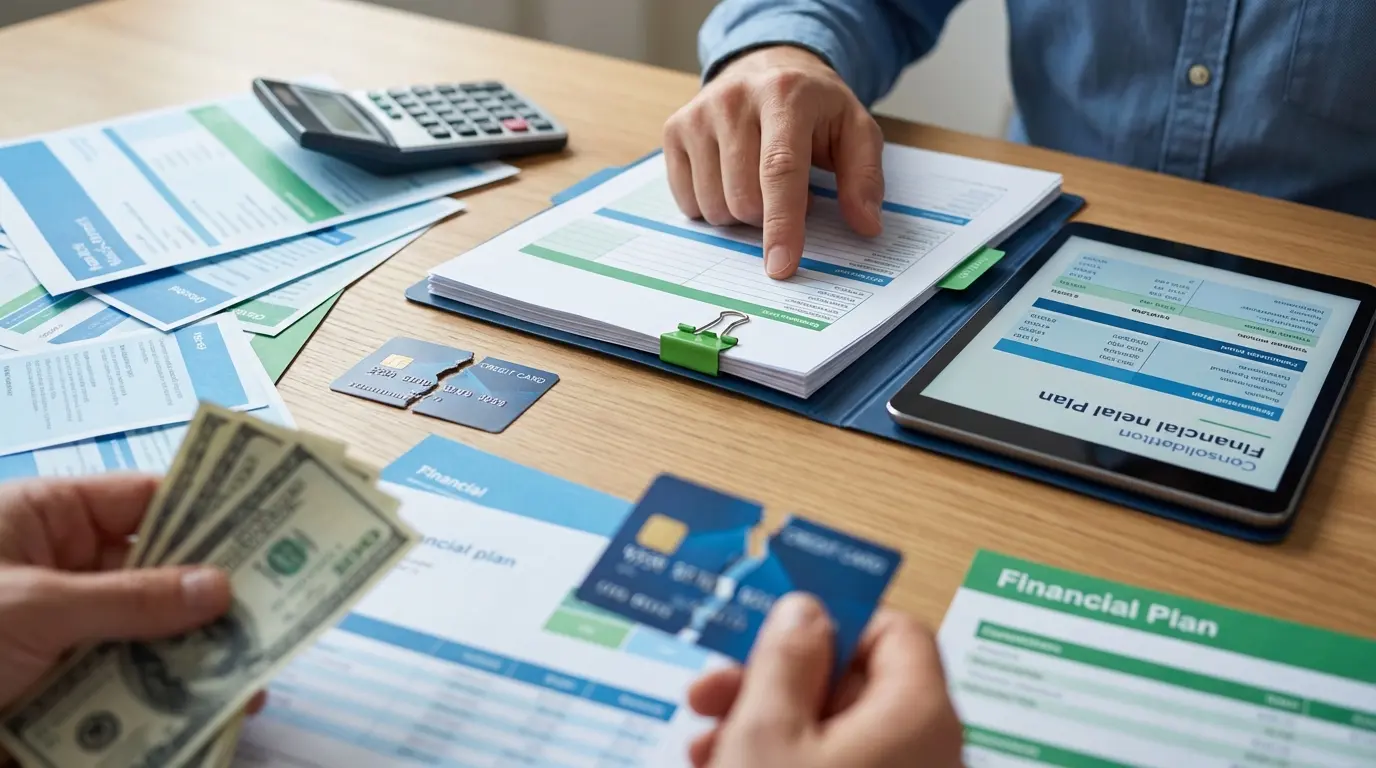
Are you constantly tired of making multiple minimum payments every month without making any real financial progress? High-interest credit card debt can quickly overwhelm your monthly budget and drastically deplete your hard-earned savings over time. Fortunately, achieving debt consolidation without good credit through specialized personal loans for bad credit is possible, providing viable paths forward even if your current credit score falls well below the 600 mark.
Debt consolidation without good credit requires strategic planning and a comprehensive understanding of alternative consumer lending markets. Combining multiple high-interest balances into a single manageable payment simplifies your financial life and reduces daily stress. We will explore practical methods to combine your financial obligations while actively protecting your long-term economic health.
Finding the right bad credit debt consolidation loan or management program demands careful research to completely avoid predatory high-interest rates. You must rigorously evaluate every available option against your specific income level and total household debt burden. This comprehensive guide provides actionable steps to regain control of your personal finances through smart consolidation strategies.
Understanding Debt Consolidation Without Good Credit and Bad Credit Debt Consolidation

An exceptionally low credit score typically signals to conservative lenders that you represent a higher financial risk. Traditional financial institutions rely heavily on standard FICO scores to either approve or deny consumer loan applications. Borrowers with scores falling below 670 frequently struggle to secure favorable interest terms for standard personal loans.
When considering how to consolidate debt with bad credit, the process involves taking out a new personal loan to pay off multiple existing debts. This popular strategy leaves you with just one monthly payment and ideally a much lower overall interest rate. The Consumer Financial Protection Bureau explicitly notes that this specific process does not magically erase your original debt.
You simply transfer what you currently owe from several different creditors to a single new lending partner. The primary mathematical goal is substantially reducing the total interest you pay over the life of the debt. Long-term success depends entirely on your disciplined ability to stop using the credit cards you just paid off.
- Debt consolidation transfers existing balances to a new loan with a single monthly payment.
- Low credit scores make traditional bank loans difficult but not impossible to secure.
- Success requires you to stop accumulating new credit card debt immediately.
Bad Credit Debt Consolidation: Effective Strategies for Low Credit Scores

Standard personal loans from major retail banks usually require good to excellent credit histories for quick approval. When researching how to consolidate debt with bad credit, you must look outside the mainstream banking system to find willing and highly reputable alternative lending partners. You must look outside the mainstream banking system to find willing and highly reputable alternative lending partners.
Leverage a Co-signer for Personal Loans for Bad Credit Consolidation
Adding a co-signer with strong credit dramatically improves your chances of loan approval with conventional lending institutions. The lender evaluates the co-signer’s creditworthiness and steady income alongside your own slightly flawed financial information. This joint application reduces the lender’s overall risk and often results in significantly lower annual interest rates.
Your co-signer accepts full legal responsibility for the outstanding debt if you fail to make scheduled payments. A single missed payment will severely damage both your credit score and your generous co-signer’s pristine score. You should only ask someone to co-sign if you have absolute certainty in your ongoing repayment ability.
Family members and close personal friends typically serve as co-signers for these sensitive types of financial agreements. Open communication about your monthly budget and repayment plan helps protect these deeply important personal relationships. Setting up automatic bank payments provides lasting peace of mind for both you and your supportive co-signer.
Enroll in a Debt Management Plan for Effective Debt Relief Options
Credit counseling agencies offer Debt Management Plans as a highly structured alternative to taking out new loans. These established nonprofit organizations negotiate directly with your various creditors to lower your current punishing interest rates. You make one consolidated monthly payment directly to the agency, and they systematically distribute the funds.
A standard Debt Management Plan typically takes three to five years to complete successfully under normal circumstances. This structured option works exceptionally well for individuals struggling with overwhelming credit card balances and unsecured debt. According to the National Foundation for Credit Counseling, most active participants see their interest rates drop significantly.
You will likely have to close your existing credit card accounts upon officially entering the management program. This strict requirement prevents you from accumulating additional debt while you diligently work through the repayment schedule. The temporary account restriction helps build strong financial habits that last long after you complete the plan.
Watch out for for-profit debt settlement companies that aggressively tell you to stop paying your existing creditors. These risky programs will severely damage your credit score and often result in highly expensive legal action.
Explore Credit Union Personal Loans for Bad Credit
Credit unions operate as member-owned nonprofit institutions rather than traditional profit-driven commercial banks serving Wall Street investors. They generally evaluate loan applications using much more flexible criteria than large national financial institutions currently employ. A local loan officer might consider your solid employment history and relationship with the credit union favorably.
Many community credit unions offer specialized consolidation loans for bad credit designed specifically for current members with low scores. These smaller, localized loans feature strict federal regulations that cap interest rates at highly manageable consumer levels. You can strategically use these funds to clear out high-interest credit cards or extremely expensive payday loans, effectively managing your unsecured debt.
Joining a credit union usually requires meeting specific regional location, employment, or organizational membership criteria for approval. The manual application process might take slightly longer than getting an instant automated decision from an online lender. The potential lifetime interest savings make this extra administrative effort highly worthwhile for struggling everyday borrowers.
Tap Into Home Equity as a Debt Relief Option
Homeowners might qualify for a home equity loan or line of credit as a debt relief option despite having exceptionally low scores. These specialized loans use your property as collateral, which dramatically lowers the perceived risk for the lender. This secured status allows you to access much larger loan amounts at highly competitive annual interest rates.
Using your primary home as collateral introduces significant risk to your long-term housing stability and family security. The secured lender can initiate immediate foreclosure proceedings if you default on your consolidated monthly loan payments. You must carefully weigh the benefit of lower interest against the terrifying possibility of losing your residence.
Standard closing costs for home equity products can add hundreds or even thousands of dollars to your balance. You need to calculate the mathematical break-even point to confirm the consolidation actually saves you real money. Discuss this powerful option with a trusted financial advisor before putting your valuable property on the line.
How to Execute Your Debt Consolidation Without Good Credit Strategy
Transitioning from overwhelming debt to a streamlined repayment plan requires a highly organized and methodical approach. You need a clear understanding of your exact financial obligations before approaching any potential lenders for assistance. Following a structured process prevents costly mistakes and positions you for the best possible approval odds.
How to Start Your Consolidation Journey
Calculate Your Total Obligations
List every single debt, current interest rate, and minimum monthly payment in a master spreadsheet to understand your baseline.
Review Your Official Credit Reports
Pull your comprehensive official reports from the three major credit bureaus to identify potential errors dragging down your score.
Compare Multiple Alternative Lenders
Apply for initial pre-qualification with several different alternative lending companies to view potential interest rates without hurting your credit.
Avoiding Common Credit Card Debt Consolidation Pitfalls
Many borrowers successfully consolidate their balances only to fall right back into massive debt a few short months later. The psychological relief of having zero balances on credit cards often triggers a dangerous and expensive spending relapse. You must address the behavioral root causes of your overspending to achieve permanent and lasting financial freedom.
Building a comprehensive emergency fund stands as your absolute strongest defense against future credit card reliance and debt accumulation. Unexpected living expenses like major car repairs or sudden medical bills easily derail the most careful repayment plans. Saving just one thousand dollars provides a critical financial buffer while you aggressively pay down your consolidated loans.
Review your monthly budget to identify specific areas where you can comfortably reduce your unnecessary discretionary spending habits. Redirect those newly saved funds directly to your new consolidation loan to greatly accelerate the overall payoff process. A disciplined personal finance budgeting approach guarantees you maximize the long-term benefits of your newly acquired lower interest rate.
Set up automatic payments for your new consolidation loan to perfectly align with your bi-weekly or monthly pay schedule. Consistent on-time payments will steadily rebuild your damaged credit profile over the next several consecutive months.
The Impact of Consolidation Loans for Bad Credit on Your Credit Score
Bad credit debt consolidation triggers several immediate changes to your credit report that temporarily lower your score for a brief period. Applying for a new personal loan requires a hard credit inquiry that typically deducts a few points right away. Opening a brand new installment account also lowers the overall average age of your established credit history, which is a key factor in your credit score.
These minor negative impacts usually fade quite quickly as you establish a perfect record of on-time monthly payments. Paying off multiple maxed-out credit cards drastically reduces your overall credit utilization ratio almost overnight in most cases. FICO scoring models heavily weigh your credit utilization percentage when mathematically calculating your overall three-digit credit number.
A significantly lower utilization ratio frequently leads to substantial credit score improvements within just two or three short months. Maintaining your older open credit card accounts with zero balances further strengthens your overall long-term credit profile standing. You will see steady upward momentum as long as you strictly avoid charging any new consumer purchases.
- Hard inquiries from loan applications will cause a temporary dip in your credit score.
- Lowering your credit utilization ratio quickly improves your overall FICO score.
- Keep your old credit card accounts open with zero balances to maximize score growth.
Debt Relief Options: Alternatives to Consolidation Loans for Bad Credit
Sometimes, a traditional consolidation loan simply remains completely out of reach due to strictly enforced lender underwriting requirements. Borrowers with severe credit damage must explore alternative methods to manage their rapidly growing monthly financial obligations. Several proven debt relief options exist that absolutely do not require taking on any new forms of debt.
The popular debt snowball method focuses on paying off your smallest balances first while maintaining minimums everywhere else. This powerful psychological approach provides quick financial wins that keep you highly motivated throughout a long repayment journey. Eliminating small accounts quickly frees up valuable monthly cash flow to attack progressively larger balances over time.
The mathematical debt avalanche method targets your specific obligations with the highest interest rates before addressing all others. This financially superior strategy saves you the maximum possible amount of money in compounding interest charges over time. You need incredibly strong personal discipline to stick with this method since small victories take longer to achieve.
Consumer bankruptcy should always serve as an absolute last resort for individuals facing truly insurmountable financial hardship today. Chapter 7 or Chapter 13 legal filings cause severe, long-lasting damage to your personal consumer credit profile. You must consult directly with a qualified bankruptcy attorney to fully understand the severe legal ramifications involved.
Moving Forward with Debt Consolidation Without Good Credit
Securing debt consolidation without good credit presents distinct challenges but remains entirely achievable for dedicated and focused borrowers. You must carefully evaluate alternative online lenders, local credit unions, and structured non-profit debt management plans. Selecting the right financial strategy helps you permanently escape the crushing cycle of high-interest monthly credit obligations.
Long-term success ultimately requires strict financial discipline and a firm personal commitment to living comfortably within your means. The consolidation loan merely provides the necessary mechanical tool to successfully restructure your current overwhelming financial liabilities. Your vastly improved daily spending habits will dictate whether this strategy creates lasting wealth or just temporary relief.
Start by thoroughly documenting your current balances and reaching out to a certified non-profit credit counseling agency today. Take immediate and decisive action to stop the financial bleeding and regain total control of your economic trajectory. The sooner you implement a clear repayment plan, the faster you will achieve true and lasting financial freedom.
Take control of your monthly payments and reduce financial stress. Find out if debt consolidation is right for you with Lendwyse.