

American households currently carry record levels of consumer debt across a wide variety of financial products. Recent data from the Federal Reserve indicates that total credit card balances now exceed one trillion dollars nationwide. When managing these balances, understanding the pros and cons of debt consolidation with a personal loan becomes essential for long-term financial stability.
You might frequently find yourself juggling various payment due dates and varying interest rates throughout each month. Debt consolidation with a personal loan offers a straightforward and effective strategy to simplify your monthly financial obligations. This specific approach involves taking out a single new loan to pay off multiple existing debts simultaneously.
By combining your balances, you transition from multiple erratic payments into one single, fixed monthly installment. This article examines the pros and cons of debt consolidation with a personal loan to help you navigate your options. We will review the significant financial implications to help you make an informed decision about your personal money.
Debt consolidation merges multiple high-interest liabilities into a single, much more manageable and predictable financial product. Consumers typically use this strategy to pay off credit cards, medical bills, or high-interest personal lines of credit. You secure a new personal loan from a bank, credit union, or online lender for the total amount owed.
Once approved, the lender either pays your creditors directly or deposits the funds into your checking account. If the lender deposits the money, you hold the responsibility of immediately paying off your individual balances. You are then left with just one single monthly payment to the new personal loan provider.
Most personal loans feature fixed interest rates and fixed repayment terms ranging from two to seven years. This predictability contrasts sharply with the variable rates and revolving balances associated with traditional credit cards. Understanding this fundamental structure helps clarify the pros and cons of debt consolidation with a personal loan.
Pros and cons of debt consolidation with a personal loan: The benefits

Using a personal loan to consolidate debt offers several distinct advantages for borrowers struggling with multiple accounts. These benefits range from psychological relief to tangible financial savings over the life of your debt. Evaluating these positive aspects helps determine if this financial move aligns with your long-term goals.
Streamlined monthly payments
Tracking different due dates, minimum payments, and various creditor portals frequently leads to missed payments and expensive late fees. Consolidation simplifies your complex financial life by reducing your monthly obligations to a single, manageable payment. You only need to remember one specific due date and deal with one primary lender moving forward.
This streamlined approach significantly reduces the mental energy required to manage your household finances and monthly budget. Automating a single payment is much easier and decreases the likelihood of accidental defaults on your record. Many lenders even offer slight interest rate discounts if you enroll in automatic payments from your checking account.
Potentially lower interest rates
The primary financial benefit of debt consolidation often comes from securing a lower overall interest rate. Credit cards in the United States currently average an annual percentage rate well above twenty percent. If you have a good credit score, a personal loan might offer a rate that is significantly lower.
A reduced interest rate means more of your monthly payment goes directly to the principal balance. This efficiency allows you to pay off the total debt faster and saves you money on expensive interest charges. You can use online calculators to compare your current blended interest rate against prospective loan offers.
Fixed repayment timeline
Credit cards represent revolving debt, meaning you can theoretically carry a balance indefinitely if you only make minimum payments. Personal loans function as installment debt with a clearly defined beginning and end date established at signing. You know exactly what month and year you will finally become completely debt-free and financially independent.
This fixed timeline provides a clear finish line that helps motivate borrowers to stay on track. The monthly payment remains constant throughout the life of the loan, protecting you from unexpected rate hikes. Budgeting becomes substantially easier because you know your exact debt obligation for the next several years.
Possible credit score improvements
Consolidating your debt can positively impact your FICO credit score in a few very specific ways. Credit utilization, which measures your credit card balances against your limits, accounts for thirty percent of your score. Paying off revolving credit cards with an installment loan dramatically lowers your credit utilization ratio almost immediately.
Furthermore, establishing a consistent history of on-time payments with your new loan builds positive credit history over time. Payment history remains the single most important factor in your credit profile, making up thirty-five percent of the total. Just remember to keep your old credit card accounts open with zero balances to maximize this scoring benefit.
- Consolidation transforms multiple erratic credit card bills into one predictable monthly payment.
- Borrowers with good credit can secure significantly lower interest rates than their current credit cards offer.
- A fixed repayment term provides a guaranteed timeline for becoming completely debt-free.
Pros and cons of debt consolidation with a personal loan: The risks
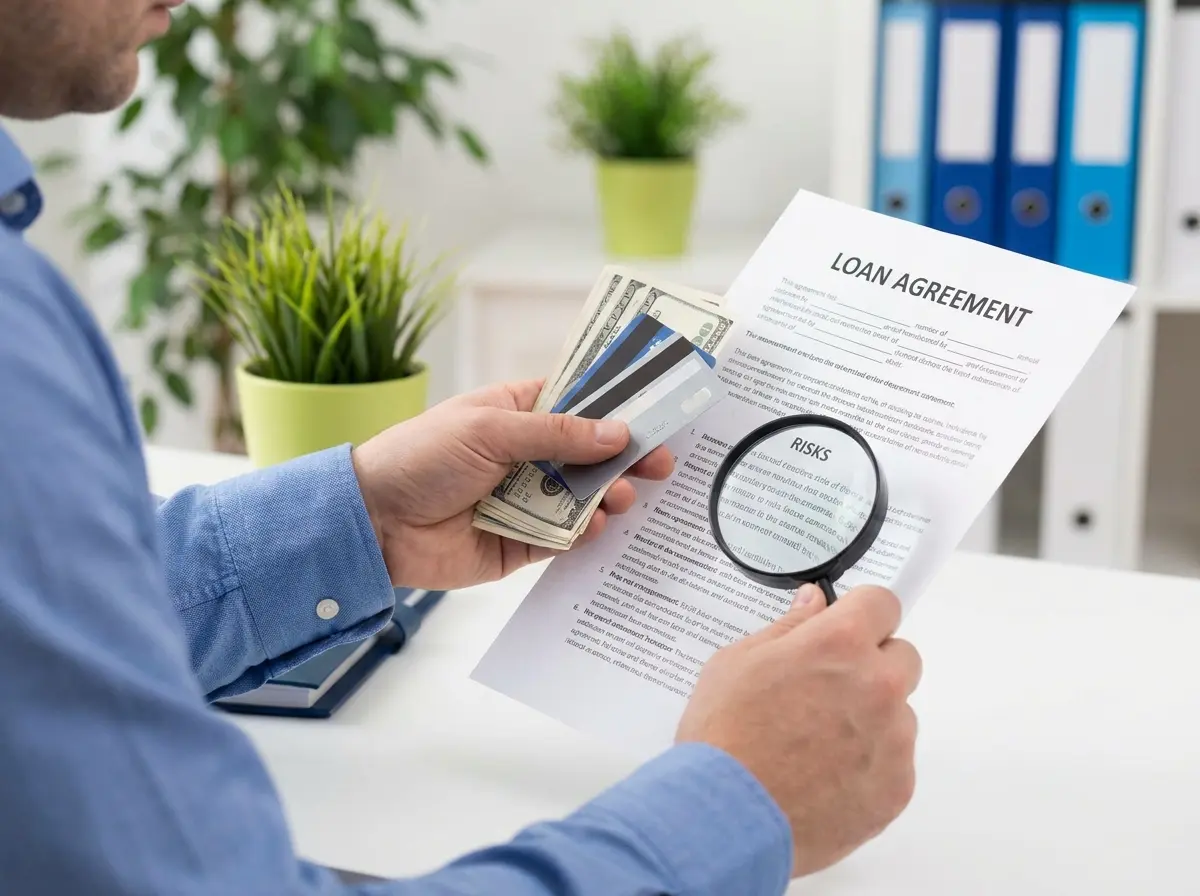
While consolidation offers clear benefits, it is certainly not a flawless solution for every financial situation. Borrowers must carefully evaluate the potential downsides before committing to a new financial product. Understanding the pros and cons of debt consolidation with a personal loan requires analyzing these significant risks.
Origination fees and hidden costs
Many personal loan providers charge an origination fee to process and fund your new loan request. These fees typically range from one to eight percent of the total loan amount approved by the lender. The lender usually deducts this fee directly from your loan proceeds before depositing the funds into your account.
If you need exactly ten thousand dollars to pay off your credit cards, a five percent fee leaves you short. You would need to borrow a slightly larger amount to cover the fee and still pay your creditors fully. Borrowers must calculate whether the long-term interest savings outweigh the upfront cost of the origination fee.
Risk of accumulating more debt
The most dangerous risk of debt consolidation involves a behavioral trap rather than a mathematical one. After using a loan to pay off your credit cards, those credit card balances return to zero. You suddenly have access to thousands of dollars in available credit lines once again for potential spending.
If you have not addressed your spending habits, you might start using those credit cards for daily purchases. You could easily end up with a large personal loan payment alongside massive new credit card balances. This scenario leaves borrowers in a significantly worse financial position than before they attempted to consolidate.
Strict credit requirements
Securing a personal loan with a favorable interest rate requires a relatively strong credit profile. Lenders reserve their absolute best rates for borrowers with excellent credit scores and stable income histories. If your credit score has already suffered due to high debt utilization, you might not qualify for low rates.
In some cases, the interest rate offered on a personal loan might exceed your current credit card rates. Consolidating debt at a higher interest rate makes little financial sense and will cost you more money overall. You should always pre-qualify with multiple lenders to see estimated rates before submitting a formal hard application.
Missing the root cause of financial trouble
A debt consolidation loan treats the symptom of high-interest debt, but it does not cure the underlying disease. Overspending, lack of an emergency fund, or insufficient income usually cause the initial debt accumulation. Moving your debt from one column to another does not resolve these fundamental household financial issues.
Without a sustainable budget and a change in financial habits, consolidation only provides temporary relief. Borrowers must commit to living within their means and building savings to avoid future reliance on credit. True financial health requires comprehensive lifestyle changes that extend far beyond a simple loan restructuring.
Closing your credit card accounts immediately after paying them off with a consolidation loan can temporarily drop your credit score. This action reduces your total available credit and significantly shortens your average account age over time. Maintaining these accounts open without a balance is often the most strategic move for your credit health.
Comparing the pros and cons of debt consolidation with a personal loan to other methods
Personal loans are just one avenue for consolidating multiple high-interest debts in the current financial market. Financial institutions offer several alternative strategies that might better suit your specific and unique economic circumstances. Comparing these options helps you evaluate the pros and cons of debt consolidation with a personal loan more effectively.
Balance transfer credit cards
A balance transfer credit card allows you to move existing debt to a new card featuring a promotional zero percent interest rate. These introductory periods typically last between twelve and twenty-one months, depending on the specific issuer. If you can pay off the entire balance before the promotion expires, you avoid interest charges completely.
However, balance transfer cards usually charge a transfer fee of three to five percent of the transferred amount. Furthermore, if you fail to clear the balance before the promotional period ends, the interest rate skyrockets immediately. This option works best for smaller debt amounts that you can aggressively eliminate within a year and a half.
Home equity loans or HELOCs
Homeowners might consider tapping into their home equity to pay off unsecured consumer debt. Home equity loans and lines of credit generally offer much lower interest rates than unsecured personal loans. Lenders can offer these attractive rates because the loan is secured directly by your physical property.
The massive drawback to this strategy involves the severe risk of losing your home if you default on payments. You are converting unsecured credit card debt into secured debt tied directly to your primary residence. Most financial advisors caution against risking your family home simply to pay off aggressive creditors.
Debt management plans
Credit counseling agencies offer debt management plans for individuals who cannot qualify for traditional consolidation loans. The agency negotiates with your creditors to lower your interest rates and waive expensive penalty fees. You make a single monthly payment to the counseling agency, which then distributes the funds to your creditors.
These plans usually take three to five years to complete and require you to close your active credit card accounts. While this does not involve taking out a new loan, it enforces strict financial discipline on the borrower. Credit counseling services can provide valuable guidance if your credit score prevents you from securing a favorable personal loan. You can also learn more about these programs through the Consumer Financial Protection Bureau.
- Balance transfer cards offer zero percent interest but require aggressive repayment before the promotional period expires.
- Home equity loans provide low rates but put your primary residence at risk if you default on payments.
- Debt management plans offer a structured alternative for borrowers who cannot qualify for a new personal loan.
How to manage the pros and cons of debt consolidation with a personal loan
Executing a successful debt consolidation strategy requires careful planning and close attention to all financial details. Following a structured process helps you secure the best possible terms and avoid common administrative pitfalls. The following steps outline the practical actions required to successfully consolidate your outstanding balances and liabilities.
Steps to Consolidate Your Debt
Calculate Your Total Debt and Blended Rate
Compile all your current credit card statements to determine your exact total balance and calculate your average interest rate across all accounts.
Check Your Credit Score
Review your credit reports from the major bureaus to identify any errors and understand your current borrowing power before applying for new credit.