

Falling behind on financial obligations creates immense stress, especially once collection agencies start calling your phone constantly. You might feel entirely overwhelmed by the constant letters demanding immediate payment for past-due accounts. Finding a path forward requires a clear understanding of how debt consolidation while in collections functions after your accounts reach third-party agencies.
The truth is that you still possess several effective debt relief strategies to regain control of your financial life. You simply need to adjust your expectations and prepare for a slightly different process than traditional debt consolidation. This approach often involves negotiating with a collection agency to settle for less than the full balance.
This comprehensive guide explains exactly how to combine and resolve your collection accounts effectively. We will cover the practical tradeoffs you must accept, the specific methods available to you, and the steps required to execute a successful consolidation strategy. Are you ready to stop the collection calls and start rebuilding your financial foundation?
Traditional debt consolidation usually involves taking out a new, low-interest loan to pay off multiple high-interest credit cards. Lenders approve these personal loans based on a strong credit history and a reliable track record of on-time payments. Once your accounts drop into collections, this traditional path generally closes because lenders view you as a high-risk borrower.
Consolidating accounts in collections requires a fundamental shift in your financial strategy. Instead of qualifying for prime interest rates, you must focus on negotiating settlements or utilizing specialized hardship programs. Your primary goal shifts from lowering your interest rate to simply satisfying the debt for less than you owe.
Collection agencies purchase bad debt for pennies on the dollar from the original creditors. This business model gives them massive flexibility to negotiate the final payoff amount with you. Because they bought your debt cheaply, they can accept a consolidated lump sum that is much lower than your original balance while still making a profit.
How Collections Impact Your Options
The presence of a collection account on your credit report drops your score significantly and immediately. According to FICO, a single collection account can lower a good credit score by up to 100 points. This massive drop eliminates your ability to qualify for zero-percent balance transfer cards or standard personal loans.
You must look past traditional banking products and explore specialized financial tools like personal loans for bad credit. Some credit unions offer specific builder loans, while debt settlement companies negotiate directly with the agencies on your behalf. Understanding your restricted options prevents you from wasting time applying for loans you will never get.
Every denied loan application adds a hard inquiry to your credit report, further damaging your already fragile score. You should only apply for financial products that cater specifically to individuals with poor credit histories. Protecting your remaining credit score requires strategic thinking and careful planning.
- Traditional consolidation loans are usually unavailable once accounts enter collections due to lower credit scores.
- Collection agencies buy debt cheaply, giving you significant leverage to negotiate lower payoff amounts.
- Stop applying for standard loans, as rejected applications add hard inquiries that further damage your credit.
Debt Consolidation While in Collections: Balancing Credit Damage and Financial Freedom
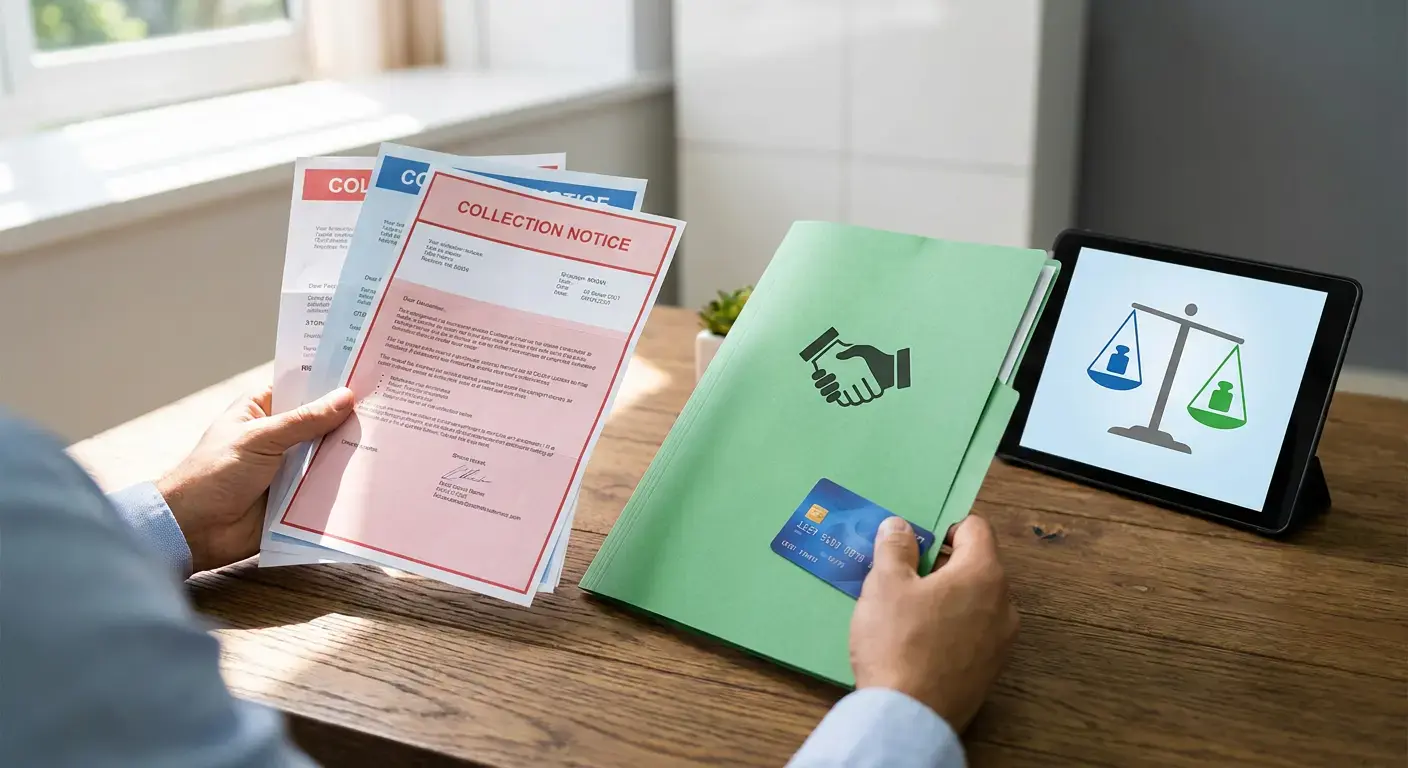
Many consumers file aggressive complaints online stating that debt consolidation or settlement programs ruined their credit scores. These complaints are entirely valid, as allowing accounts to default and settling them will absolutely damage your credit profile. However, you must view this temporary credit score damage through the lens of long-term financial freedom.
You face a difficult choice between protecting a numeric credit score and actually eliminating your overwhelming financial burdens. If you maintain minimum payments on massive credit card balances, you protect your score but sacrifice your income for decades. Choosing to consolidate and settle your debts damages your score today but frees up your cash flow permanently.
Financial math strongly supports taking the credit hit if your debt burden exceeds your ability to pay the principal. Paying high interest rates for twenty years costs you tens of thousands of dollars in wasted capital. A lower credit score is a small price to pay to escape a lifetime of unmanageable minimum payments.
Why Your Credit Score Drops Initially
Your credit score drops during consolidation because you are fundamentally breaking the original terms of your lending agreements. When you settle an account for less than the full balance, the creditor reports it as legally settled rather than paid in full. The major credit bureaus view this partial payment as a negative mark against your reliability as a borrower.
Furthermore, the consolidation process often requires you to stop paying your creditors while you build up a lump-sum settlement fund. These missed payments generate thirty, sixty, and ninety-day late marks on your credit file very quickly. Each subsequent late payment drags your score down further until the account finally charges off.
You cannot avoid this mathematical reality if you choose the settlement route for your collection accounts. The system penalizes you heavily for defaulting, and you must accept this penalty to achieve the ultimate goal of debt freedom. Accept the temporary drop in your score as a necessary step in your financial recovery plan.
Negative marks, including collection accounts and late payments, remain on your credit report for exactly seven years. However, their impact on your actual credit score decreases significantly as the negative information ages.
The Long-Term Benefit of Resolving Debt
The immediate pain of a low credit score fades relatively quickly once you actually resolve your outstanding collection accounts. After you settle the debts, the collection agencies must update your balances to zero on your credit reports. Having zero balances significantly improves your debt-to-income ratio, which is a major factor in future lending decisions.
Freed from the burden of monthly collection payments, you can redirect your income to productive financial goals. You can finally build an emergency savings fund, contribute to retirement accounts, or save for a down payment. The money that previously enriched collection agencies now stays in your bank account where it belongs.
Your credit score will naturally begin to recover as soon as the collection accounts show a zero balance. You can actively rebuild your credit profile using secured credit cards and responsible financial habits moving forward. Within two to three years of consolidation, many people qualify for normal lending products again.
Primary Methods for Debt Relief and Consolidating Collection Accounts
You have several distinct methods available to consolidate your debts, even after they reach the collection stage. Each approach carries different requirements, risks, and timelines for completion. You must evaluate your monthly cash flow carefully to determine which specific method fits your current financial reality.
Some methods require you to negotiate directly with creditors, while others involve third-party organizations managing the process for you. The right choice depends heavily on your comfort level with confrontation and your ability to save money consistently. Review the following primary methods to understand how they function in practice.
Debt Settlement Programs
Debt settlement stands out as the most common path for individuals facing multiple accounts in active collections. In a debt settlement program, you deposit a fixed monthly amount into an escrow account rather than paying your creditors. Once the account grows large enough, you or a settlement company offers a lump sum to satisfy the debt completely.
This method works exceptionally well for collection accounts because the agencies bought your debt at a steep discount. Experian notes that collection agencies are often willing to accept 40% to 60% of the original balance. By settling multiple accounts sequentially, you effectively consolidate your debt into one affordable monthly deposit.
Be aware that forgiven debt exceeding six hundred dollars may be considered taxable income by the IRS. You might receive a 1099-C form at tax time for the portion of the debt the agency wrote off. You should consult a tax professional to understand how a large settlement might affect your annual tax liability.
Personal Hardship Loans
While traditional loans remain out of reach, you might still qualify for specialized personal hardship loans. Certain online lenders and credit unions evaluate factors beyond just your credit score, such as your current income and employment history. If approved, you use the loan funds to pay off all your collection accounts immediately.
This method provides the truest form of consolidation, leaving you with exactly one monthly payment to a single lender. The interest rates on these loans are notoriously high, often approaching thirty-six percent annually. You must calculate the math carefully to confirm that the new loan payment is actually affordable.
Using a hardship loan stops all collection calls instantly because the original debts are paid in full. However, if you default on this new loan, you will face aggressive collection efforts from the new lender. You should only choose this path if your income is highly stable and secure.
Debt Management Plans (DMPs)
Nonprofit credit counseling agencies offer Debt Management Plans designed to help consumers pay back their principal balances systematically. A credit counselor reviews your finances and negotiates with your creditors to waive fees and lower interest rates. You then make one consolidated monthly payment to the agency, which distributes the funds to your creditors.
DMPs rarely reduce the actual principal balance you owe, meaning you must repay the entire original debt amount. They do, however, stop the aggressive collection calls and provide a structured, predictable path to debt freedom. Most DMPs require a strict commitment of three to five years to complete the program entirely.
Not all collection agencies agree to participate in Debt Management Plans, which can complicate your consolidation efforts. If a major creditor refuses the proposed terms, you might still have to deal with them separately outside the program. You must verify that all your major collection accounts will participate before signing the final agreement.
How to Consolidate Unsecured Debt While in Collections
Taking action requires a systematic approach to avoid making costly mistakes with collection agencies. You must document everything thoroughly and refuse to make agreements based purely on verbal promises over the phone. The process of consolidating collection debt requires patience, organization, and a clear understanding of your legal rights.
The Federal Trade Commission heavily regulates how collection agencies can interact with consumers. You have the right to demand written proof of the debt and the right to dictate how they contact you. Follow these specific steps to regain control and execute your consolidation strategy effectively.
How to Execute a Consolidation Strategy
Gather All Collection Notices
Pull your credit reports from all three major bureaus and collect every physical letter you have received. Create a master spreadsheet listing the original creditor, the current collection agency, the account number, and the total balance demanded.
Verify the Debt Validity
Send a formal debt validation letter to every agency demanding proof that they legally own the debt. Do not pay a single cent until they provide written documentation proving the exact balance and their right to collect it.
Choose Your Consolidation Path
Analyze your monthly budget to see how much disposable income you can allocate to debt repayment. Select either a debt settlement approach, a hardship loan, or a debt management plan based strictly on your mathematical reality.
Execute the Agreement
Finalize the paperwork with your chosen provider or negotiate the final settlement terms directly with the agencies. Keep copies of all final agreements and zero-balance letters indefinitely in case the debt is ever sold again.
Completing these steps prevents you from falling victim to common collection agency tactics. By verifying the debt first, you might discover that some accounts are past the legal statute of limitations. This procedural diligence saves you money and protects your legal rights throughout the entire consolidation process.
Negotiating Debt Consolidation While in Collections With a Collection Agency
If you choose to handle the settlement process yourself, you must learn how to negotiate firmly with professional debt collectors. These individuals receive extensive training in psychological tactics designed to extract maximum payments from stressed consumers. You must strip emotion from the conversation and treat the negotiation strictly as a business transaction with the collection agency.
Collection agents often try to force you into unmanageable payment plans by threatening legal action or garnishments. The Consumer Financial Protection Bureau outlines strict rules against making false legal threats under the Fair Debt Collection Practices Act. Knowing your rights allows you to confidently shut down aggressive tactics and steer the conversation back to settlement terms.
Always start your negotiation by offering roughly twenty to twenty-five percent of the total balance owed. The agent will likely reject this initial offer, but it establishes a low anchor point for the subsequent counteroffers. Expect to settle most standard credit card and medical collections for forty to fifty percent of the original balance.
Determining Leverage and Payment Capacity
Your strongest leverage in any negotiation is a lump-sum cash payment available immediately. Agencies prefer cash today over a promised payment plan tomorrow, as payment plans frequently fail. If you have cash on hand, make it clear that you are offering a one-time, take-it-or-leave-it settlement.
You can also request a “pay-for-delete” agreement during your final negotiation phase. In this scenario, the agency agrees to completely remove the collection account from your credit report in exchange for payment. While many major agencies officially claim they do not do this, it remains a highly effective tactic in practice.
Never agree to a settlement amount that you cannot comfortably pay within the agreed timeframe. If you bounce a settlement check or miss an installment, the agency will immediately cancel the agreement and demand the full balance again. Honesty about your actual payment capacity prevents you from failing the consolidation process halfway through.
Always demand the final settlement agreement in writing before transferring any funds. If an agent refuses to email or mail you a formal settlement letter, hang up the phone immediately.
Debt Relief and Settlement Alternatives if Debt Consolidation While in Collections Fails
Sometimes the math simply does not work out, and you cannot afford even the most generous consolidation or settlement offers. If your income drops unexpectedly or your debt load is mathematically insurmountable, you must consider alternative legal protections. Recognizing when consolidation is impossible saves you from wasting money on failed settlement attempts.
You have powerful legal tools designed specifically to protect consumers from permanent financial ruin. While these options carry severe credit consequences, they provide immediate relief from aggressive collection efforts. Consider these alternatives carefully if your debt consolidation efforts stall completely.
Chapter 7 and Chapter 13 Bankruptcy
Bankruptcy represents the ultimate reset button for individuals drowning in unmanageable consumer debt. Chapter 7 bankruptcy liquidates your non-exempt assets and completely discharges most unsecured debt, including credit cards and medical bills. This process typically finishes in a few months, leaving you completely debt-free but with a severe mark on your credit.
Chapter 13 bankruptcy functions somewhat like a court-ordered debt consolidation plan. You make a single monthly payment to a bankruptcy trustee for three to five years, and the court discharges any remaining eligible balances at the end. This option stops foreclosures and repossessions while forcing creditors to accept the court’s payment terms.
Filing for bankruptcy immediately enacts an automatic stay, which legally prohibits collection agencies from contacting you. While bankruptcy stays on your credit report for up to ten years, it often provides the fastest path to actual financial recovery. Consult a qualified bankruptcy attorney to review your specific financial situation.
Waiting Out the Statute of Limitations
Every state limits the amount of time a creditor has to sue you for an unpaid debt. This legal timeframe, known as the statute of limitations, generally ranges from three to six years for credit card debt. Once a debt passes this threshold, the collection agency loses its primary weapon: the ability to garnish your wages through a lawsuit.
If your collection accounts are very old, consolidating or making a partial payment might actually be a terrible idea. Making even a small five-dollar payment can restart the statute of limitations clock completely from day one. You must verify the age of your debts before initiating any contact or negotiation with a collection agency.
Waiting out the clock requires strong nerves, as agencies will still call and send threatening letters. However, if they cannot legally sue you, their threats lack any real teeth. If your debts are near the expiration date, doing absolutely nothing might be your strongest financial strategy.
Rebuilding Your Credit Score After Debt Consolidation While in Collections
Completing your debt consolidation plan marks the beginning of your financial recovery, not the end. You now face the challenge of rebuilding a credit profile damaged by past collections and settlements. This rebuilding phase requires immense discipline and a commitment to new financial habits.
Start by opening a secured credit card with a reputable bank or credit union. You deposit a small cash amount, usually two hundred dollars, which serves as your credit limit. Use this card for small monthly subscriptions and pay the balance in full every single month to generate a positive payment history.
You must also prioritize building a cash emergency fund to prevent future reliance on high-interest credit. Aim to save at least one thousand dollars initially, eventually growing it to cover three months of living expenses. A strong cash reserve guarantees you will never fall back into the collections cycle when unexpected emergencies arise.
- Bankruptcy provides a legal reset button if your debt burden makes consolidation mathematically impossible.
- Verify the statute of limitations in your state before paying old debts, as making a payment restarts the legal clock.
- Rebuild your credit using secured cards, and build an emergency fund to avoid future debt cycles.
Final Thoughts on Debt Consolidation While in Collections
Dealing with debt consolidation while in collections requires you to look past the temporary damage to your credit score. You are making a highly calculated trade, exchanging a pristine credit profile for genuine relief from crushing financial obligations. Escaping a lifetime of minimum payments provides a far better return on investment than protecting a three-digit number.
You hold more power in this situation than the collection agencies want you to believe. By demanding validation, negotiating aggressively, and getting all terms in writing, you can systematically eliminate your outstanding balances. Take a deep breath, review your financial numbers objectively, and take the first step toward permanent debt freedom today. Explore your consolidation options and get a fresh start with Lendwyse.