

Rent is due tomorrow, the power company sent a shut-off notice, you have $15 until payday, and there’s no food in the house. When you’re facing a financial emergency, you don’t need long-term financial planning advice. You need to know how to get financial relief now, today, with resources and actions that provide immediate help before the situation becomes catastrophic.
The good news is that emergency financial assistance exists specifically for crisis situations, and knowing how to get financial relief now means understanding which programs can help immediately, which organizations to contact first, and what actions you can take in the next 24 hours to stabilize your situation.
This guide provides immediate, actionable steps you can take right now, not next week or next month, but today and tomorrow. You’ll learn which emergency assistance programs provide same-day help, how to access food and utility assistance immediately, where to find emergency cash when you’re truly desperate, how to buy time on urgent bills, and which longer-term relief options you can access quickly.
How to Get Financial Relief Now: Immediate Steps During a Financial Crisis
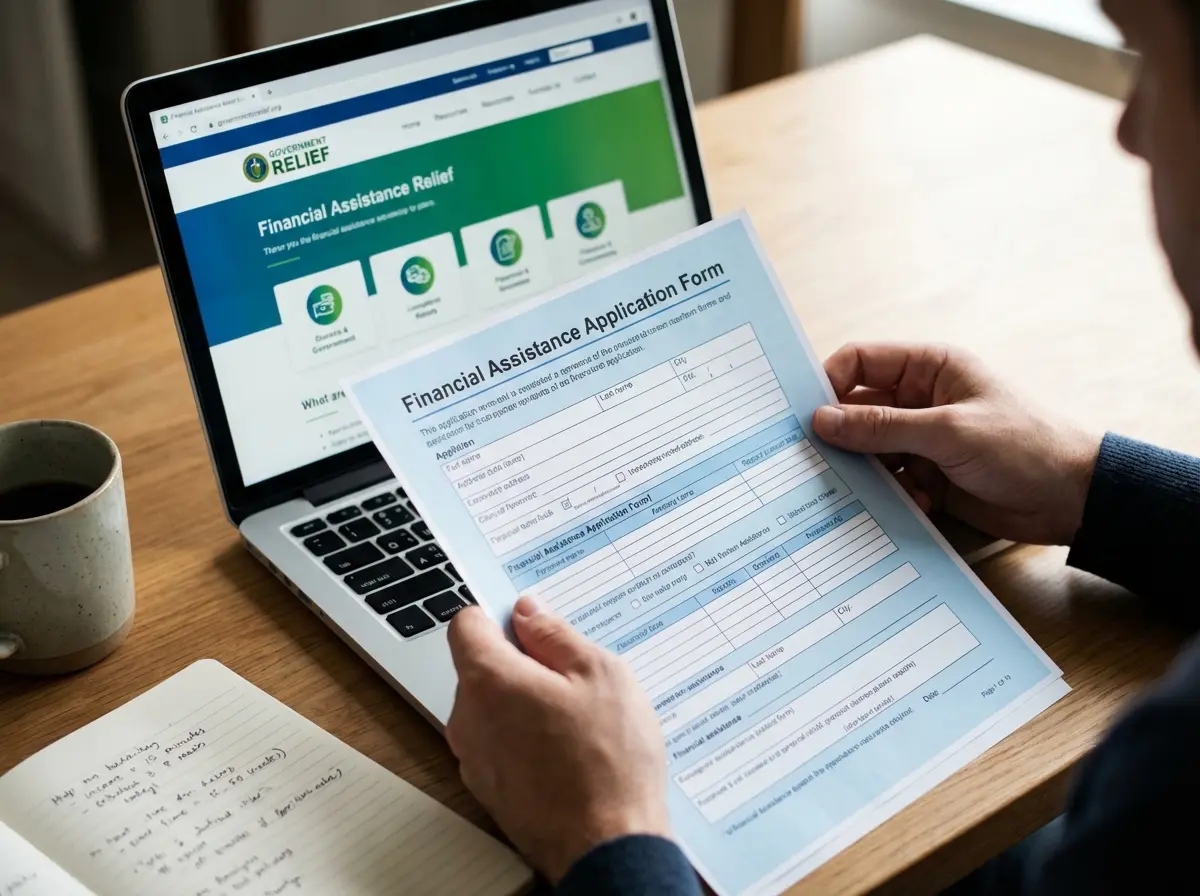
When a financial crisis hits, you must pause and assess your actual cash flow immediately to determine your next steps.
Look at your bank account to determine exactly how much money you currently have available for your immediate survival needs. Prioritize essential expenses to protect your household before paying any creditors, including your basic needs like food and medicine.
This initial assessment serves as the foundation for every subsequent decision you will make regarding your long-term recovery and stability.

Contact Your Creditors Before You Miss Payments
The moment you realize you’re heading toward financial trouble, contact your lenders before you miss a payment. This one action can prevent collection calls, credit damage, and escalating fees.
Banks and credit card companies have hardship programs, but most people never access them because they wait until they’re already behind. When you call before missing payments, you’re seen as proactive. When you call after defaulting, you’re negotiating from weakness.
Hardship programs typically offer:
- Reduced minimum payments for 3-6 months
- Temporarily lowered interest rates
- Waived late fees
- Modified payment schedules
These programs exist for situations like yours, but you must ask. They’re not advertised.
How to Request Help
Call the number on your statement and say: “I’m experiencing financial hardship due to [specific reason] and I’m concerned about making payments. Do you have a hardship program that could help temporarily?”
Document everything:
- Representative’s name and date
- Specific terms offered
- Reference number
- Get the agreement in writing before making payments
Create a Crisis Budget Now
List only essential expenses: housing, utilities, food, transportation to work, and required insurance. Everything else stops temporarily: streaming services, dining out, subscriptions, and entertainment.
Calculate: Monthly income – Essential expenses = Available for creditor negotiations
This number tells you what you can realistically offer. Don’t promise more than you can sustain.
You Are Not Your Emergency
Financial hardship is a situation you’re in, not who you are. Job loss, medical emergencies, and unexpected expenses happen to millions annually. Lenders know this, and that’s why hardship departments exist.
Take action today:
- Call creditors and request hardship programs
- Create a crisis budget
- Document all conversations
- Cut non-essential expenses immediately
These steps won’t solve everything overnight, but they prevent the situation from getting catastrophically worse.
Rental Assistance and Housing Relief Programs

Your housing and utilities are non-negotiable. Address these before anything else. You can’t recover financially if you’re homeless or living without power and heat.
Emergency Rental Assistance
If you’re behind on rent and facing eviction:
Call 211 immediately or visit the 211 website. This free service connects you to emergency rental assistance programs in your area. Most programs require:
- Proof of income loss or hardship
- Past-due rent notice or eviction paperwork
- Lease agreement
- Identification
Where emergency rent money comes from:
- County and state emergency rental assistance programs
- Federal Emergency Rental Assistance (ERA) funds
- Local housing authorities
- Nonprofit organizations (Catholic Charities, Salvation Army)
- United Way programs
Application processing varies. Some provide help within days, others take weeks.
Apply immediately, even if help won’t arrive before your eviction date.
Many judges grant continuances when you can prove you’ve applied for assistance.
Mortgage Forbearance for Homeowners
If you’re behind on your mortgage payment, contact your servicer and request forbearance. This pauses or reduces payments for 3-6 months while you stabilize financially.
Important: Forbearance isn’t forgiveness. You’ll owe the missed payments eventually, but it prevents immediate foreclosure and buys you time.
Utility Assistance Programs
Before the shut-off happens, contact:
LIHEAP (Low Income Home Energy Assistance Program): Federally funded program helping with heating and cooling bills. Apply through your state agency.
Your utility company directly: Most have crisis assistance programs and payment plans. Call and say: “I’m facing shut-off and need to know what assistance programs you offer.”
Local charities: Many provide one-time utility bill assistance. Catholic Charities, Salvation Army, and local churches often help with emergency utility payments.
Housing Stability Enables Everything Else
You can’t focus on debt relief, job searching, or financial recovery if you’re worried about eviction or living without electricity. Secure housing and utilities first. Everything else can wait.
Debt Relief and Managing Credit Card Debt
Credit card debt at 18-28% interest rates can trap you in a cycle where payments barely cover interest charges. You need a strategy that actually reduces what you owe.
Free Credit Counseling First
Before paying for debt relief services, talk to a nonprofit credit counselor for free. Contact the National Foundation for Credit Counseling (NFCC) or call 211 for local referrals.
A certified credit counselor can:
- Review your complete financial situation at no cost
- Help you create a realistic budget
- Explain all your debt relief options
- Set up a debt management plan if appropriate (typically reduces interest rates to 6-10%)
Debt management plans work best when:
- You can afford to repay full balances with lower interest rates
- You want one consolidated monthly payment
- You need structure and professional support
Typical cost: $0-50 setup fee, $20-50/month maintenance.
Debt Consolidation Loans
If you have good credit (650+), a consolidation loan at 8-15% APR can save thousands compared to 22% credit card rates.
Before consolidating:
- Compare total loan cost (principal + all interest) against the current debt trajectory
- Ensure the monthly payment fits your budget comfortably
- Close credit cards or commit not to use them (consolidating while accumulating new debt makes everything worse)
DIY Debt Payoff Methods
Debt Avalanche (saves the most money): Pay minimums on everything except your highest-interest debt. Attack that one with all that extra money. When paid off, move to the next-highest rate.
Debt Snowball (builds momentum): Pay minimums on everything except your smallest balance. Eliminate it quickly for a psychological win, then attack the next-smallest.
Both methods work. Choose based on whether you’re motivated by math (avalanche) or quick wins (snowball). The key is stopping all new credit card charges during payoff.
When to Consider Debt Settlement
Only explore settlement if you genuinely cannot afford minimum payments even with reduced interest rates. Settlement damages credit significantly and doesn’t work for everyone. Research companies thoroughly through BBB and CFPB before sharing information.
Student Loan Debt Relief and Assistance Programs
Student loans have unique protections and options that credit cards don’t. Never default as the consequences are severe and permanent.
Federal Student Loans: Use Income-Driven Repayment
If you can’t afford your federal student loan payments, do not skip payments or ignore your servicer. Instead, switch to an income-driven repayment (IDR) plan immediately.
Income-driven plans adjust payments based on your income:
- Payments can be as low as $0 if you’re unemployed or earn very little
- After 20-25 years of qualifying payments, the remaining balance is forgiven
- Prevents default, wage garnishment, and tax refund seizure
Four IDR plans available:
- Income-Based Repayment (IBR)
- Pay As You Earn (PAYE)
- Revised Pay As You Earn (REPAYE)
- Income-Contingent Repayment (ICR)
Apply through StudentAid.gov or call your servicer directly. Processing takes 2-4 weeks, but your servicer will pause collection during review.
Public Service Loan Forgiveness (PSLF)
If you work for the government or a qualifying nonprofit organization, you may be eligible for loan forgiveness after 120 qualifying payments (10 years).
Qualifying employment includes:
- Teachers in public schools
- Nurses and doctors in nonprofit hospitals
- Social workers and public defenders
- Government employees at any level
Critical: Must be on an IDR plan and employed by a qualifying organization while making payments. Verify employment annually at StudentAid.gov.
Private Student Loans Have Fewer Options
Private lenders may offer temporary forbearance or deferment during financial hardship, but:
- No income-driven plans
- No forgiveness programs
- Limited financial hardship options
Contact your private lender immediately if struggling. Some offer:
- 3-6 month forbearance
- Extended repayment terms
- Graduated payment plans
Never Consolidate Federal Into Private
Don’t refinance federal student loans into private loans unless you’re certain you’ll never need:
- Income-driven repayment plans
- Loan forgiveness programs
- Flexible forbearance options
- Death/disability discharge
Once federal loans become private, you lose all federal protections permanently. The slightly lower interest rate rarely justifies losing these safety nets.
Instead: Consolidate multiple federal loans into a Direct Consolidation Loan. This simplifies payments while preserving all federal benefits.
Medical Debt and Financial Assistance Programs
Medical bills are negotiable in ways other debts aren’t. Use this to your advantage before bills go to collections.
Request Financial Assistance Immediately
Most nonprofit hospitals must offer charity care or financial assistance by law. Many will reduce or eliminate bills for patients under 200-400% of the federal poverty level.
Before paying any medical bill:
- Request an itemized bill – General statements often contain errors or duplicate charges
- Ask about financial assistance – Say: “I cannot afford this bill. What financial assistance programs do you offer?”
- Submit income documentation – Provide pay stubs, tax returns, or unemployment proof
Many hospitals will reduce bills by 50-100% based on income. Apply before the bill goes to collections. Assistance programs often disappear once debt is sold.
Negotiate Payment Plans or Discounts
Medical providers often accept:
- 30-60% cash settlement for immediate payment
- Interest-free payment plans spread over 12-24 months
- Reduced settlements if you’re uninsured (ask for “uninsured discount”)
Say this: “I want to pay this bill, but I can only afford [realistic amount] per month. Can you set up an interest-free payment plan?”
Most providers prefer guaranteed monthly payments over sending debt to collections, where they recover pennies on the dollar.
Verify Debt Before Paying Collectors
If a collection agency contacts you about medical debt:
Don’t pay immediately. Instead, send a debt verification letter within 30 days requesting:
- Proof you owe the debt
- Original creditor information
- Itemized breakdown of charges
Check for billing errors:
- Services you didn’t receive
- Duplicate charges
- Amounts insurance should have covered
Know your rights: The No Surprises Act protects you from most unexpected out-of-network bills. If billed for emergency care at out-of-network rates, dispute it.
Prescription Assistance Programs
Can’t afford medications? Check:
- NeedyMeds – Database of pharmaceutical assistance programs
- RxAssist – Free/low-cost medication programs
- GoodRx – Prescription discount coupons (often cheaper than insurance)
- Manufacturer programs – Most drug companies offer patient assistance
These programs can reduce medication costs by 50-100%, freeing hundreds of dollars monthly for other critical expenses.
Government Benefits and Assistance Programs
Multiple government programs exist to help during financial emergencies. Many people don’t know they qualify or how to access them.
Start With 211 and Benefits.gov
Call 211 or visit 211.org – Free service connecting you to federal, state, and local assistance programs in your area.
Visit Benefits.gov – Answer questions about your situation and income to see which programs you may qualify for:
- SNAP (food assistance)
- TANF (cash assistance for families)
- Medicaid (health coverage)
- LIHEAP (utility bill help)
- WIC (nutrition for pregnant women and children)
- Unemployment insurance
- SSI (Supplemental Security Income)
Gather Documentation Before Applying
Speed up approval by having these ready:
- Photo ID (driver’s license or state ID)
- Social Security card for everyone in the household
- Proof of income (pay stubs, unemployment letters, or zero-income affidavit)
- Recent utility bills showing your address
- Bank statements (if required)
- Proof of expenses (rent/mortgage, childcare costs)
Federal Programs That Provide Immediate Help
SNAP (Food Stamps): Provides monthly funds for groceries. Emergency SNAP can be approved within 7 days in crisis situations.
TANF (Temporary Assistance for Needy Families): Cash assistance for families with children. Amount and eligibility vary by state.
Unemployment Insurance: File immediately when you lose your job. Benefits typically start 2-3 weeks after approval. Don’t wait — apply the week you lose employment.
State and Local Programs
Beyond federal programs, check for:
- State emergency assistance funds
- Property tax relief (especially for seniors and the disabled)
- Emergency cash grants for specific crises
- Childcare subsidies for working parents
- Job training and vocational rehabilitation
Find state programs: Visit your state’s .gov website and search “[Your State] emergency assistance” or call 211 for local referrals.
Avoid Government Grant Scams
Red flags:
- Charging a fee to “help you get government money.”
- Guaranteeing you’ll receive grants.
- Unsolicited calls or emails about “unclaimed benefits.”
- Websites not ending in .gov
Real government benefits never require an upfront payment. If someone asks for money to help you get benefits, it’s a scam.
Small Business Relief Program and Financial Aid
If your business is struggling, specialized programs exist beyond personal financial assistance. Many require applications before closing or defaulting on obligations, so act quickly.
SBA Disaster Loans and Programs
Small Business Administration (SBA) offers:
Economic Injury Disaster Loans (EIDL): Low-interest loans (currently around 4%) up to $2 million for businesses experiencing revenue loss. Used for working capital, payroll, rent, and operating expenses.
SBA 7(a) Loans: General small business loans with longer repayment terms and lower rates than traditional bank loans. Can be used for debt refinancing, equipment, or working capital.
Apply at SBA.gov. Processing takes 2-4 weeks for disaster loans, longer for standard programs.
Local and State Business Grants
Beyond federal programs, search for:
- State small business relief funds
- County or city emergency business grants
- Chamber of Commerce assistance programs
- Community Development Financial Institutions (CDFIs)
- Industry-specific relief (restaurants, childcare, retail)
Find local programs: Contact your local Small Business Development Center (SBDC) or SCORE chapter for free counseling and grant information.
Separate Business and Personal Finances
Critical warning: Avoid using personal loans or credit cards for business expenses if possible. Mixing personal and business debt:
- Puts your personal assets at risk
- Complicates bankruptcy protection if the business fails
- Creates tax reporting nightmares
If you must use personal credit temporarily, have a clear repayment plan from business revenue.
Free Resources and Mentorship
SCORE: Free mentoring from retired executives who help with business planning, cash flow management, and crisis strategy.
Small Business Development Centers (SBDCs): Free or low-cost consulting on financial management, loan applications, and business restructuring. Find yours at AmericasSBDC.org.
Local Chamber of Commerce: Networking, advocacy, and information about state/local funding opportunities.
Cash Flow Survival Tactics
Immediate actions:
- Negotiate extended payment terms with vendors and suppliers
- Contact your landlord about rent deferral or reduction
- Apply for utility assistance (even businesses can qualify for some programs)
- Cut non-essential subscriptions and services immediately
- Invoice outstanding receivables aggressively
Consider offering discounts for immediate payment from customers who owe you money. Cash now is worth more than full payment in 60 days when you might not survive that long.
Conclusion
Finding the right assistance program or relief program is the first step toward reclaiming your financial independence and peace of mind. By exploring rental assistance, student loan relief, and government benefits, you can address the immediate pressures of your current situation.
Remember to stay informed, stay persistent, and use the resources available through an official government organization to guide your path forward. Your commitment to finding a solution today will pay dividends in the form of a more secure and predictable financial life tomorrow.
Debt won’t fix itself — but the right plan can. Use Simple Debt Solutions to compare multiple loan offers in one place and find the option that helps you pay less and get out of debt faster.