
Deciding whether a debt relief program is right for you isn’t something most people do casually. It usually comes after months or even years of stress, sleepless nights, and a growing sense that the strategies you’ve been using just aren’t getting you anywhere.
If you’re weighing your options, especially with significant credit card debt, it helps to understand how real people evaluate the choice and what ultimately gives them the confidence to say, “Yes, this is the right step for me.”
In this article, we’ll walk through the common emotional and practical markers people identify, using direct feedback from Trustpilot reviewers who chose to share their experiences with Lendwyse — a company many turn to for debt relief support.
Table Of Contents:
- The Stress Threshold: When “Something Has to Change”
- The First Call: Comfort, Respect, and Clarity
- Trust Through Transparency: Clear Explanations Win the Day
- Empathy and Respect: Why Emotional Safety Is a Decision Factor
- From Skepticism to Satisfaction: Overcoming Doubts
- Practical Benefits Versus Emotional Relief
- Follow-Through and Support: Why Consistency Matters
- The Final Tipping Point: Confidence and Readiness to Act
- What This Means for You
- Your Next Step Doesn’t Have to Be Perfect. It Just Has to Be Forward
The Stress Threshold: When “Something Has to Change”
Before most people begin researching debt relief, there’s a build-up period. A long stretch of frustration and helplessness.
Many reviewers share that moment of recognition: they know something about their financial situation isn’t working, but they’re not sure what to do next.
One reviewer admits simply ignoring it for a while:
“I ignored it for a while, then finally responded and received what I asked for.”
Another shared their exhaustion with the status quo:
“Trying to budget got worse & worse the past few years, and I lost a lot of sleep trying to figure things out. I was making ALL of my payments on time — but the interest being added back…”
That sentiment is echoed across dozens of reviews: debt has worn them down, and they’re ready for something that can produce a real result.
For many, this first moment when managing debt stops feeling like a long tunnel and starts feeling like a dead end is the real start of the decision process.
The First Call: Comfort, Respect, and Clarity
Once people decide to explore a debt relief program, most begin with a simple conversation — often a phone call or virtual consultation. This isn’t just administrative; it’s the emotional turning point.
Real reviewers consistently highlight these early interactions as critically influential in their decision-making.
Here are some direct examples:
-
One reviewer said:
“I was nervous making the phone call after an application had been completed. Thankfully, I was teamed up with Stacey. She made me feel at ease and made sure that I knew every aspect of the program.”
-
Another shared how the first conversation helped reduce anxiety and build confidence:
“The process for peace of mind begins with the first phone call… Taj … explained beyond finance. A program that helps…”
-
A simple but revealing review highlights the emotional impact:
“Everyone I spoke with was kind and courteous. Very refreshing. My wait time was not long. Taj was extremely helpful and patient. I felt comfortable discussing my situation…”
These experiences all point to one thing: how you are treated in your first interaction matters deeply. Feeling heard, respected, and understood is a core part of how people decide whether a debt relief program is a good fit.
Trust Through Transparency: Clear Explanations Win the Day
A debt relief program can sound intimidating, especially if you’ve never worked with one before. That’s where explanation matters.
People consistently say that understanding the how and why behind the solution made them more comfortable choosing it.
For example:
“Maurice was so helpful and gave me amazing insight and advice about my accounts!! I really didn’t get myself into debt further but found a way out!!!”
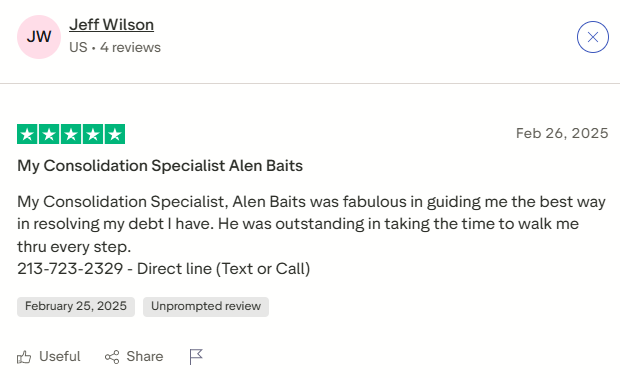
Another reviewer highlighted the value of a thorough explanation:
And on transparency:
“Rochelle Hockemeyer was helpful and amazing. She showed understanding, did not feel judge. Had an amazing call and felt comfortable and at ease with everything spoken about.”
These comments demonstrate that clarity builds confidence, particularly around financial topics that many people find complex or stressful.
Empathy and Respect: Why Emotional Safety Is a Decision Factor
Debt can carry significant emotional weight. Shame. Anxiety. Fear. These feelings often go hand-in-hand with financial stress.
For many people, how they were treated in the process of exploring debt relief is just as important as the numbers.
Take these quotes:
-
“I wasn’t made to feel like I was an awful person, very understanding and personable.”
-
“Luis was a very helpful employee. I never felt talked down to about my financial status…”
-
“Everyone I spoke with were very understanding, helpful and treated me with such respect…”
These aren’t just vague “nice” comments. They directly relate to how confident people feel about moving forward. When someone feels judged, they hesitate. When they feel understood, they relax. And that emotional comfort often pushes them toward a decision.
From Skepticism to Satisfaction: Overcoming Doubts
It’s rare for someone to move into debt relief without some hesitation.
One reviewer admitted they were skeptical at first:
“Well, I was a little skeptical at first, but he made a lot of sense in what he was saying…”
Another review underlines how initial hesitation was ultimately replaced by trust:
“…I was hesitant at first but he explained everything to me. very knowledgeable. he knows his craft and offered the best solution… I felt like a valued customer.”
These moments emphasize that doubt doesn’t disappear — it gets resolved. And the resolution comes through explanation, empathy, and confidence-building support.
This also highlights a key lesson for anyone choosing a program: your hesitation is normal, and it doesn’t need to prevent you from moving forward once you have the right information.
Practical Benefits Versus Emotional Relief
For many people, the decision isn’t driven by logic or emotion alone. It’s the combination.
When reviewers talk about tangible benefits, they pair those with emotional relief:
-
“I can’t even thank you enough for taking care of my debt… I should have done this a long time ago. I’m so happy, this made my day!!!!”
-
“Quick, easy painless!”
These comments show that once the fear of engaging with the process fades, people begin to feel relieved, and that feeling becomes part of the decision itself.
It’s one thing to understand that a plan could lower interest or consolidate payments.
It’s another to feel like a weight has been lifted.
Follow-Through and Support: Why Consistency Matters
The decision isn’t just made in one call. It’s influenced by interactions over time.
One reviewer praised ongoing support:
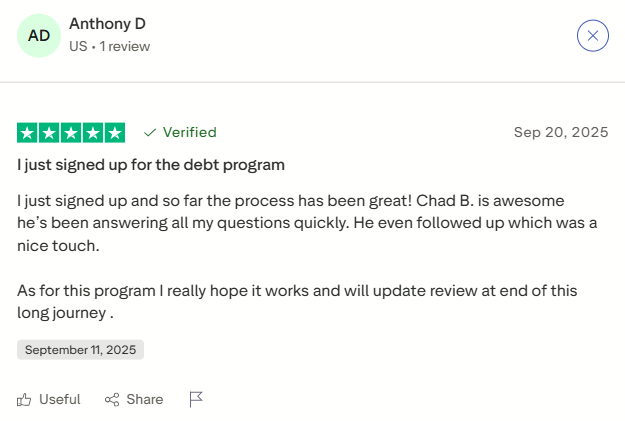
Another noted personalized attention:
“My Consolidation Specialist… he took the time to walk me thru every step.”
Consistent communication, prompt follow-up, and tailored support help reinforce someone’s belief that they made the right choice.
The Final Tipping Point: Confidence and Readiness to Act
So if stress triggers the decision process, empathy builds comfort, and clarity builds confidence, what finally makes someone commit?
For many, it’s the moment they stop feeling alone and start feeling empowered.
Reviewers express this clearly:
“…I have entered this program feeling confident I’ll be taken care of.”
“Excellent service and within perfect timing.”
“I felt comfortable discussing my situation.”
These statements reflect a shift from fear and uncertainty to confidence and agency, and that shift is the psychological core of their decision.
What This Means for You
If you’re reading this and weighing similar choices, you’re not alone. Thousands of people have stood where you stand now — uncertain, stressed, and unsure of the next step.
Here’s what you can take away from these real experiences:
You don’t need to have it all figured out
People call because they’re not experts in debt relief — and that’s OK.
How you’re treated matters
A supportive, respectful conversation can reduce anxiety and help you make a better decision.
Clarity is empowerment
Understanding your options — and the “why” behind them — can build confidence.
Relief isn’t just financial
It’s emotional. Feeling respected and understood plays a huge role in deciding a program is right for you.
And finally:
Real decisions are based on experience — not fear
These reviewers didn’t decide because they were sold something. They decided because they felt supported, informed, and finally ready to take control of their financial journey.
Your Next Step Doesn’t Have to Be Perfect. It Just Has to Be Forward
If there’s one thing these real stories make clear, it’s this: people didn’t choose debt relief because they had all the answers. They chose it because they finally had a conversation that made them feel understood, respected, and hopeful again.
If high-interest credit card debt is keeping you up at night, you don’t need another spreadsheet or generic advice. You need clarity. You need options explained without judgment. And you need to know whether there’s a real path forward for your situation.
That’s exactly where Lendwyse starts.
A simple, confidential conversation can help you:
-
Understand whether debt relief is right for you
-
Explore options without pressure or obligation
-
Get clear answers from people who actually listen
-
Take control of your debt instead of letting it control you
You don’t have to commit to anything today. You just have to take the first step — the same step thousands of others took when they decided it was time for relief.
👉 Talk to Lendwyse today and see what your options really look like.