

Choosing a debt consolidation company shouldn’t feel like a gamble. Yet most people approach these decisions with anxiety, unsure what to ask or how to evaluate the answers they receive. The difference between companies that genuinely help and those that exploit your desperation often comes down to how they respond to specific, pointed questions.
Based on hundreds of verified customer experiences with LendWyse and insights from debt relief experts, we’ve compiled the essential questions every borrower should ask before committing to any debt consolidation service.
More importantly, we’ll show you what legitimate answers look like versus red flag responses that should send you running.
These aren’t just informational questions. They’re tests that reveal a company’s true priorities and whether they can be trusted with your financial future.
Table Of Contents:
- Questions About Their Services
- Questions About Costs and Fees
- Questions About Process and Timeline
- Questions About Support and Communication
- Questions About Their Track Record
- The Comfort Test Questions
- The Bottom Line: Questions Reveal Character
- Ready to Ask These Questions?
Questions About Their Services
Question 1: “What debt relief options do you offer?”
Companies that only push one product regardless of your situation care more about sales than solutions.

Legitimate answer sounds like: “We work with a network of solutions, including personal loans for debt consolidation, debt management programs, and debt settlement options. After reviewing your specific situation — your debt amount, credit score, income, and goals — we’ll recommend what makes the most sense for you. Sometimes that’s a personal loan, sometimes it’s an alternative program.”
Red flag answer sounds like: “We specialize in [one product] and it works for everyone.” Or refusing to discuss alternatives when their primary service doesn’t fit.
What LendWyse customers experienced:
JANET RANK shared: “Maurice was so helpful and kind. I did not qualify for a personal loan and he helped me understand what alleviate could do to help me. And for the first time in a while, I feel very positive about the process.”
This willingness to discuss alternatives even when the customer didn’t qualify for the primary service demonstrates a genuine commitment to finding solutions.
Question 2: “How do you determine which solution is right for me?”
This reveals whether they’ll actually assess your situation or just push you through their standard funnel.
Legitimate answer sounds like: “We’ll review your total debt, interest rates, monthly income, credit score, debt-to-income ratio, and your timeline goals. Based on that complete picture, we’ll discuss which approach gives you the best chance of success. We’ll also consider factors like whether you can afford fixed monthly payments or need more flexible arrangements.”
Red flag answer sounds like: Vague responses about “our system” or immediately recommending a product before asking detailed questions about your situation.
What LendWyse customers experienced:
Michael Hamilton noted: “Almas made my experience great. He listened to me and tailored the program to my needs, which was very much appreciated.”
This personalization demonstrates proper assessment rather than cookie-cutter recommendations.
Question 3: “What are the potential downsides or risks of this approach?”
No debt relief solution is perfect. Companies that only discuss benefits are either ignorant or dishonest.
Legitimate answer sounds like: “With personal loan consolidation, you’ll need to avoid accumulating new credit card debt or you’ll end up worse off. Your credit may temporarily dip from the hard inquiry. If you choose debt settlement, your credit score will be significantly impacted during the program, and there may be tax implications on forgiven debt. Let me walk through the specific challenges you might face…”
Red flag answer sounds like: Only discussing benefits, avoiding questions about downsides, or claiming there are no risks or negative aspects.
What LendWyse customers experienced:
Paula Siwek wrote: “ALEN is a human being, and made me feel informed and comfortable. I didn’t know what to expect from our conversation, and he made the terms clear and realistic.”
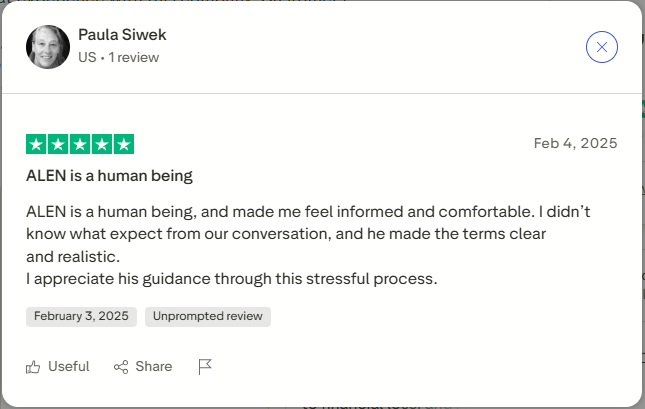 Setting clear and realistic expectations (including challenges) demonstrates honesty.
Questions About Costs and Fees
Question 4: “What fees do you charge, and when are they due?”
Hidden fees are a hallmark of predatory operations. Legitimate companies are transparent about all costs upfront.

Legitimate answer sounds like: “For personal loans, lenders may charge origination fees between 1-8% depending on your credit, which are deducted from loan proceeds. We don’t charge fees for connecting you with lenders. If you pursue debt settlement instead, those programs typically charge 15-25% of enrolled debt, paid as debts are settled, not upfront.”
Red flag answer sounds like: Requiring large upfront fees before any service is provided, vague responses about “various fees,” or refusing to provide specific numbers until you’ve already committed.
What to verify:
- Are fees disclosed in writing before enrollment?
- When exactly are fees charged?
- Are there any hidden costs not mentioned initially?
Question 5: “How much will I actually save compared to my current situation?”
This forces companies to do actual math rather than make vague promises.
Legitimate answer sounds like: “Let’s calculate it. You’re carrying $15,000 at an average of 22% APR. At minimum payments, you’ll pay roughly $25,000 total over 15+ years. With a personal loan at 12% over 5 years, your total repayment would be around $20,000, saving you $5,000 and getting you debt-free 10+ years sooner.”
Red flag answer sounds like: Exaggerated savings claims without backing them up with specific calculations based on your actual debts and rates.
Follow-up question: “Can you show me those calculations in writing?”
Questions About Process and Timeline
Question 6: “What is the complete timeline from start to finish?”
Realistic timelines demonstrate honest expectations. Overly optimistic promises set you up for disappointment.
Legitimate answer sounds like: “If you qualify for a personal loan, approval can happen within 1-3 days and funding within a week. The loan term would be 3-7 years, depending on what you choose. If we recommend debt settlement instead, those programs typically run 24-48 months depending on your debt amount and monthly payment capacity.”
Red flag answer sounds like: Promises of unrealistically fast debt elimination or vague responses that avoid giving specific timeframes.
Question 7: “What happens if I can’t make a payment?”
Life happens. Knowing the consequences and options for hardship shows you’re planning realistically.
Legitimate answer sounds like: “With a personal loan, missed payments damage your credit and may incur late fees. Most lenders will work with you if you communicate proactively about hardship. With debt management programs, you can often adjust your payment if circumstances change. The key is contacting us immediately if you’re struggling so we can explore options before you miss payments.”
Red flag answer sounds like: Avoiding the question, acting like missed payments are impossible, or threatening immediate severe consequences without discussing any flexibility.
Question 8: “How will this affect my credit score?”
Your credit score impacts your financial future. Understanding the credit impact is essential for informed decisions.
Legitimate answer sounds like: “A personal loan application will cause a temporary small dip from the hard inquiry. Once funded, paying off credit card balances will improve your credit utilization, which typically helps your score within a few months. If you make on-time payments, your score generally improves over time. Debt settlement, however, will significantly damage your credit during the 2-4 year program since it involves stopping payments.”
Red flag answer sounds like: Claiming debt consolidation has no credit impact, or conversely, exaggerating negative impacts to scare you into one particular solution.
Questions About Support and Communication
Question 9: “Who will I work with throughout this process, and how can I reach them?”
Accessibility after enrollment separates legitimate services from companies that disappear after the sale.
Legitimate answer sounds like: “You’ll be assigned a dedicated specialist who will be your main contact. Here’s their direct phone number and email. They’ll check in regularly, but you can also reach out anytime with questions. We also have a customer support team available during business hours if your specialist is unavailable.”
Red flag answer sounds like: Vague responses about “customer service departments” with no direct contact information, or claims you’ll rarely need to contact them after enrollment.
What LendWyse customers experienced:
Jeff Wilson noted: “My Consolidation Specialist, Alen Baits, was fabulous in guiding me the best way in resolving my debt I have. He was outstanding in taking the time to walk me thru every step.”
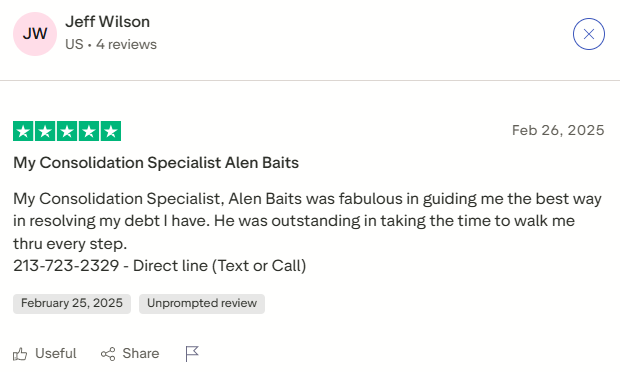 Providing direct contact information demonstrates accessibility and accountability.
Anthony D shared: “Chad B. is awesome he’s been answering all my questions quickly. He even followed up which was a nice touch.”
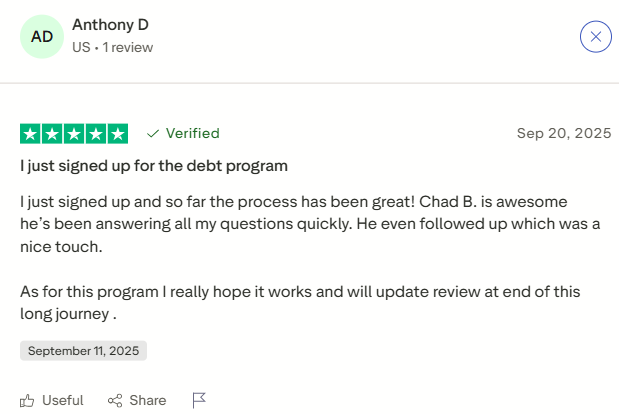 Proactive follow-up shows continued commitment beyond the initial sale.
Question 10: “What ongoing support do you provide after enrollment?”
Debt consolidation is a multi-year journey. You need support throughout, not just during the sales process.
Legitimate answer sounds like: “Your specialist will check in monthly to see how things are going and answer any questions. We’re available whenever you need clarification about your account, help navigating lender communications, or advice about staying on track. If circumstances change, we can discuss adjustments to your plan.”
Red flag answer sounds like: Implying that once you’re enrolled, you’re on your own, or that support ends after the initial setup.
Questions About Their Track Record
Question 11: “Can you provide references or direct me to verified customer reviews?”
Real customer experiences reveal patterns that marketing materials hide.
Legitimate answer sounds like: “Absolutely. We maintain profiles on Trustpilot, Google Reviews, and the Better Business Bureau, where you can read verified customer experiences. We have over 600 reviews with a 4.7-star average on Trustpilot. I’d encourage you to read through them (both positive and negative) to get a complete picture.”
Red flag answer sounds like: Refusing to provide references, only offering cherry-picked testimonials on their own website, or becoming defensive when asked about reviews.
What to verify:
- Are reviews on independent platforms?
- How does the company respond to negative reviews?
- Do reviews mention consistent behaviors or just generic praise?
- Are there hundreds of reviews or just a handful?
Question 12: “Are you licensed and regulated, and can you prove it?”
Legitimate debt relief companies comply with state and federal regulations.
Legitimate answer sounds like: “Yes, we’re licensed in all states where required. We comply with FTC regulations regarding debt relief services. We can provide documentation of our licensing and accreditation.”
Red flag answer sounds like: Avoiding the question, claiming regulations don’t apply to them, or becoming evasive about licensing status.
The Comfort Test Questions
Question 13: “Can I have time to think about this before deciding?”
This isn’t really a question. It’s a test of whether they use pressure tactics.
Legitimate answer sounds like: “Of course. This is a major financial decision and you should take whatever time you need. I’ll send you everything we discussed in writing. Feel free to call back with any additional questions. There’s no pressure or time limit.”
Red flag answer sounds like: Creating artificial urgency (“This rate expires today”), implying you’re making a mistake by waiting, or pressuring you to commit immediately.
What LendWyse customers experienced:
Maria King-Woods noted: “The experience was calm. I never felt pressured by Stacey S.”
Legitimate companies give you space to make informed decisions.
Question 14: “What happens if I decide this isn’t right for me after enrolling?”
Understanding cancellation policies and your rights reveals whether the company is confident in their service.
Legitimate answer sounds like: “You can cancel at any time. If you haven’t received loan funds yet, there’s no penalty. If you’ve already received loan proceeds, you’d need to follow the lender’s terms for payoff. For debt management or settlement programs, you can typically cancel with written notice, though you’d be responsible for any services already rendered.”
Red flag answer sounds like: Making cancellation sound impossible, threatening severe penalties, or refusing to discuss the possibility of backing out.
The Bottom Line: Questions Reveal Character
The questions themselves matter less than how companies respond. Legitimate debt relief services:
- Answer everything thoroughly and patiently
- Welcome questions as signs of engaged decision-making
- Provide realistic expectations, including challenges
- Give you time and space to think
- Treat you with respect regardless of your debt situation
- Direct you to independent reviews and documentation
- Admit when their service isn’t the right fit
As Grace D expressed: “Kameel was the reason I was even open about this company. Not only did he take the time to help me understand the whole process, he was very kind about it. His expertise was obviously on point and there were no questions he was unable to answer.”
When you find a company that responds to tough questions with patience, honesty, and expertise, you’ve found a service you can trust.
Ready to Ask These Questions?
Don’t commit to any debt consolidation service until you’ve asked these questions and evaluated the responses against legitimate standards.
Start your evaluation with a company that 600+ verified customers confirm:
- Answers every question thoroughly
- Provides realistic, honest assessments
- Never pressures or rushes decisions
- Treats you with dignity and respect
- Offers multiple solution pathways
- Remains accessible throughout the process
The right questions protect you from predatory companies. The right answers guide you to legitimate help. Your financial future depends on asking both and trusting companies that respond with patience, honesty, and expertise.
Don’t settle for vague answers or pressure tactics. You deserve complete transparency before making this important decision.