
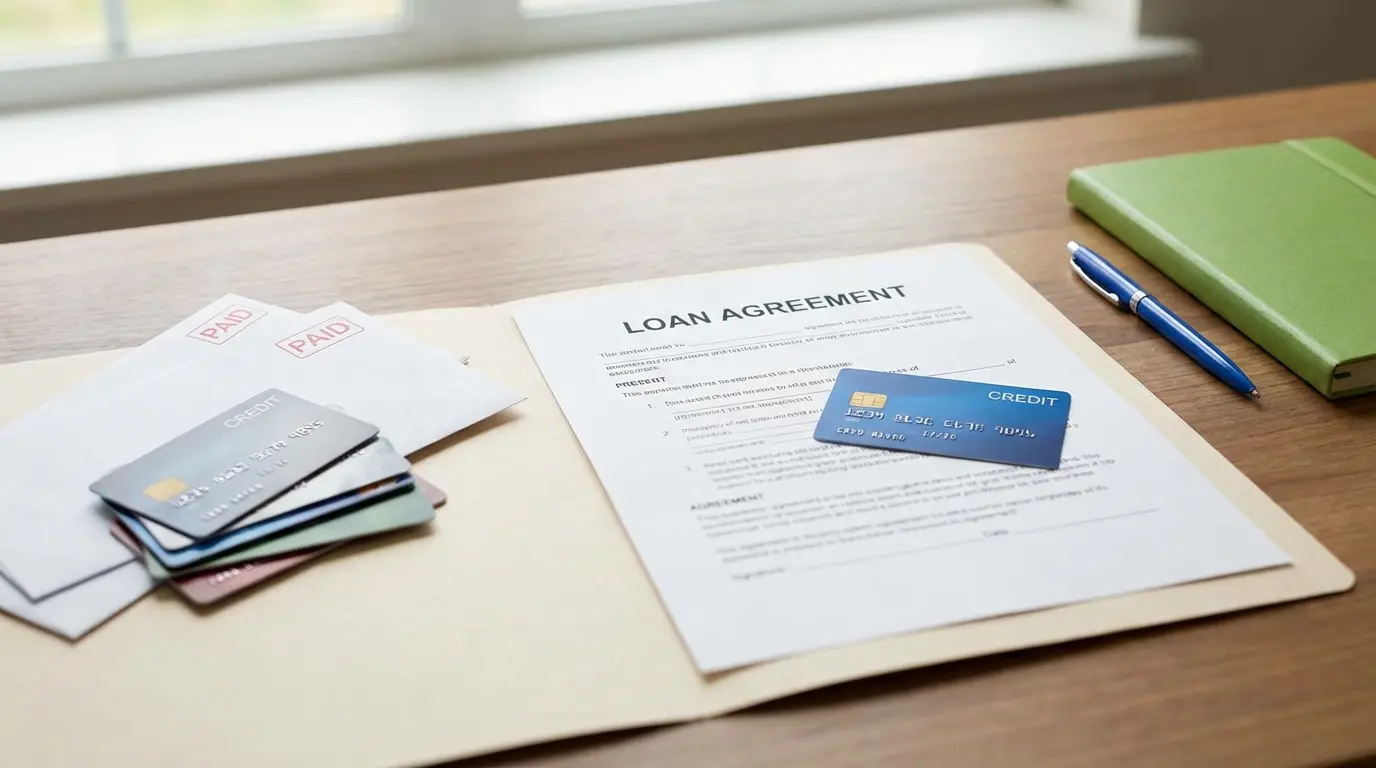
Carrying high interest balances creates a heavy financial burden for many hardworking Americans across the country. A credit card debt consolidation loan provides a structured way to regain financial control over your life. This specific financial product pays off your existing credit cards and replaces them with a single obligation.
Instead of tracking multiple due dates, you manage one monthly payment with a clear payoff timeline. A debt consolidation personal loan typically offers a lower interest rate than standard revolving retail credit. This rate reduction helps you clear your principal balances much faster over the life of the loan.
Understanding the Credit Card Debt Consolidation Loan

Many consumers struggle to understand how credit card debt consolidation actually works in everyday financial practice. Lenders issue a personal loan specifically to pay off your various creditors and outstanding retail accounts. You receive a lump sum, which immediately clears your outstanding balances and stops compound interest growth.
Once the initial balances drop to zero, you begin making payments to the new financial institution. A consolidation loan usually features a fixed rate that lasts for the entire duration of the term. This predictability makes household budgeting much easier for families managing tight financial margins each month.
Banks and credit unions offer these debt consolidation loans to qualified borrowers with stable employment histories. You might also find competitive loan options through specialized online lending platforms operating across the United States. Comparing different lenders helps you secure the most favorable borrowing conditions available in the current market.
The Mechanics of a Credit Card Debt Consolidation Loan
Finding effective debt relief starts with calculating your total outstanding obligations across all your active credit cards. You add up every credit card balance to determine your exact borrowing need for the application. The new debt consolidation loan must cover this entire amount to be a truly effective strategy.
After approval, the lender might pay your creditors directly on your behalf to streamline the process. Other financial institutions deposit the funds into your checking account so you can distribute the money yourself. Either way, the primary goal remains clearing that expensive card debt completely from your financial profile.
This strategy transforms revolving credit into a structured installment contract with a definitive final payoff date. Your new monthly payment stays exactly the same until you retire the balance entirely. Structured debt pay plans prevent balances from growing endlessly due to the crushing weight of compound interest.
- A credit card debt consolidation loan replaces multiple high-interest revolving balances with one predictable fixed-rate installment payment.
- Calculating your exact total outstanding balance is the critical first step before applying for any new credit.
- Securing a lower interest rate allows more of your money to go toward the principal balance.
Qualifying for a Credit Card Debt Consolidation Loan

Lenders evaluate several critical financial factors before approving a debt consolidation personal loan application. Your credit score serves as the primary indicator of your historical borrowing reliability and risk level. A higher score typically unlocks lower interest rates and significantly better borrowing conditions for the consumer.
Institutions also analyze your debt-to-income ratio to assess your monthly repayment capacity accurately. They want concrete proof that your regular income comfortably covers the new monthly payment obligation. Reliable employment history gives lenders confidence in your ability to maintain consistent payments over several years.
If your credit profile looks weak, securing approval for a personal loan becomes significantly harder. Some borrowers ask a creditworthy family member to co-sign the debt consolidation loan to gain approval. This shared approach divides the legal responsibility and often improves your approval odds with strict lenders.
How Your Credit Score Impacts Credit Card Debt Consolidation Loan Approval
Your credit score directly influences the specific interest rates offered on personal loans today. Borrowers with excellent scores secure rates that fall well below standard credit card market averages. This specific interest rate gap dictates exactly how much money you actually save by refinancing.
A fair or poor credit score might result in less favorable terms for your consolidation loan. Sometimes, the offered rate on a debt consolidation loan exceeds your current retail card rates. In that specific scenario, consolidating debt makes very little mathematical sense for your household budget.
Checking your credit reports beforehand helps you spot and fix potential errors before you apply. Dispute any inaccurate negative marks before you submit an application for a new consolidation loan. Even minor improvements to your profile can yield noticeable interest rate reductions and save you money.
Lowering your credit utilization ratio before applying can boost your credit score significantly. Pay down small balances first to improve your chances of getting a better rate on your personal loan.
Consolidate Debt: Step-by-Step Guide to a Credit Card Debt Consolidation Loan
Taking the right preliminary steps makes consolidating debt a smooth and highly efficient financial process. You need a clear plan of action before signing any new binding financial agreements. Rushing into a contract without proper research often leads to unfavorable terms and higher long-term costs.
Begin by gathering all your recent billing statements from every single active creditor you owe. You must know your exact payoff amounts, current interest rates, and minimum monthly payments required. This baseline information allows you to accurately evaluate any new debt consolidation loan offers you receive.
Many online lenders allow you to check rates without heavily impacting your credit profile. These pre-qualification tools show estimated monthly payments and potential interest rates based on soft inquiries. Use a reliable consolidation calculator to compare these estimates against your current repayment trajectory.
How to Consolidate Your Credit Card Balances
Calculate Your Total Debt
Use a debt consolidation calculator to add up your balances and determine your exact funding needs.
Compare Loan Offers
Review multiple debt consolidation loans from different banks, credit unions, and online lenders.
Apply and Disburse Funds
Submit your formal application to consolidate credit card debt and authorize the final payoffs.
Weighing the Costs and Benefits of a Credit Card Debt Consolidation Loan
Every financial decision carries specific advantages and potential drawbacks for individual borrowers. A debt consolidation loan simplifies your life by reducing multiple confusing bills down to one. This structural change helps many people avoid missed due dates and expensive late penalty fees.
You also gain a clear timeline for becoming completely debt-free in the near future. Revolving credit cards lack a defined payoff date if you only make the minimum monthly payment. An installment loan establishes a strict schedule, typically spanning anywhere from two to five years.
However, you must consider the fees associated with processing the new personal loan. Lenders sometimes charge an origination fee that reduces your total disbursed funds at closing. You must factor these origination fees into your overall cost analysis to determine true savings.
Avoiding the Credit Card Debt Consolidation Loan Trap
Clearing your balances creates a dangerous psychological temptation to start spending money again. The biggest risk of debt consolidation is running up new credit card debt almost immediately. Your accounts now show zero balances, making them available for immediate use at retail stores.
If you resume charging purchases, you face double the financial trouble very quickly. You must pay the consolidation loan while managing the new card debt simultaneously each month. This destructive cycle pushes many borrowers deeper into severe financial distress than before.
To prevent this outcome, you must change your underlying spending habits immediately after funding. Consider leaving your accounts open to help your credit utilization, but cut up the physical cards. This strategy preserves your credit score while removing the daily temptation to overspend.
Closing your old accounts immediately after paying them off can temporarily damage your credit profile. Keep your oldest accounts open with zero balances to maintain a long and healthy credit history.
Evaluating the Financial Mechanics of a Credit Card Debt Consolidation Loan
Let us examine the specific mathematical benefits of a debt consolidation strategy in practice. Suppose you carry significant balances across four different high-interest retail credit card accounts. A debt consolidation loan replaces those four variable rates with one single fixed rate.
Fixed rates protect you from unexpected market fluctuations and sudden interest rate hikes. Your monthly payment remains completely stable throughout the entire repayment period of the contract. This stability allows you to plan your household budget with absolute certainty and confidence.
You must review the privacy policy of any lender before submitting your sensitive information. Legitimate financial institutions protect your personal data securely during the online application process. Secure handling of your financial records prevents identity theft and unauthorized third-party access.
Structuring Your Credit Card Debt Consolidation Loan Terms
Lenders typically offer personal loans with varying repayment schedules to accommodate different budgets. You might choose between three, five, or even seven-year terms depending on your needs. A longer term reduces your monthly payment but increases the total interest paid overall.
Shorter terms require a higher monthly payment but save money over the life of the loan. You must select a timeline that fits your current income and expenses comfortably without strain. A debt consolidation loan fails if the new payment stretches your budget too thin.
Maintaining a strong payment history on this new loan steadily builds your credit score. Consistent, on-time payments demonstrate financial responsibility to future potential lenders and mortgage brokers. This positive activity eventually offsets any initial dip caused by the hard credit inquiry.
- Always calculate origination fees into your total cost when evaluating personal loans.
- Cutting up your physical cards prevents you from accumulating new debt while paying off the loan.
- Choosing a shorter repayment term saves you money on interest but requires higher monthly payments.
Exploring Alternative Debt Relief and Credit Card Debt Consolidation Loan Methods
A standard personal loan is not the only way to tackle outstanding balances effectively. You should evaluate every consolidation option before signing a binding contract with any lender. Different financial situations require different approaches to achieve lasting debt relief for your family.
A balance transfer credit card offers a compelling alternative for managing smaller balances. These specific cards often feature a zero percent introductory interest rate for a promotional period. You transfer your existing card balance to the new account to avoid interest charges temporarily.
This strategy works best if you can repay the full amount before the promotion expires. If a balance remains after the introductory period, standard high rates apply immediately to the account. You must read the fine print carefully regarding retroactive interest and balance transfer fees.
Home Equity and Secured Credit Card Debt Consolidation Loan Options
Homeowners might consider using an equity loan to consolidate their outstanding obligations. These secured loans use your property as collateral to guarantee repayment to the financial institution. Because the risk is lower, lenders offer much lower interest rates than unsecured personal loan options.
Using equity loans for debt consolidation carries one massive and undeniable risk. If you default on the payments, the lender can legally foreclose on your house. Exchanging unsecured credit card debt for secured debt requires careful consideration and planning.
Some borrowers explore using a secured auto loan to tap into their vehicle’s equity. This method functions similarly but puts your transportation at risk instead of your primary home. Most financial advisors recommend sticking to an unsecured debt consolidation loan when possible.
Maximizing Your Credit Card Debt Consolidation Loan Strategy
Successfully managing a debt consolidation personal loan requires strict discipline and intense focus. You must treat your new monthly payment as an absolute priority in your household budget. Missing a single payment on your consolidation loan damages your credit score severely.
Creating a comprehensive budget helps you track exactly where your money goes each month. Allocate any extra funds toward your principal balance to pay off the debt faster. Making additional payments reduces the total interest you pay over the life of the loan.
A flexible loan might allow extra payments without charging any prohibitive prepayment penalties. Always verify this specific detail before finalizing your debt consolidation loan agreement. The ability to accelerate your payoff timeline provides valuable financial freedom much sooner.
Managing Multiple Credit Card Debts Effectively
Handling multiple debts simultaneously drains your mental energy and depletes your financial resources. A debt consolidation strategy consolidates these disparate obligations into one highly focused target. This singular focus makes tracking your financial progress much more straightforward for the average consumer.
Watch your credit score closely as you pay down the consolidated balance over time. You should see a gradual improvement as your total outstanding principal decreases month by month. A higher score opens doors to much better financial products in the future.
Remember that a personal loan represents a helpful tool, not a magical financial cure. You must address the underlying spending behaviors that created the original debt on your credit cards. Without behavioral changes, you risk accumulating new balances alongside your consolidation loan.
Conclusion
Finding real debt relief starts with taking action and following a clear plan. A credit card debt consolidation loan can simplify multiple balances into one predictable monthly payment, helping you escape high-interest debt.
Before applying, review your finances carefully—check your credit score and total debt to choose the best strategy. Knowing your numbers ensures you make a smart, informed decision.
Consolidation only works with discipline. Avoid new debt, make on-time payments, and stay consistent. With focus and commitment, you can pay off your balance and achieve lasting financial freedom.
Let LendWyse help you find the right consolidation loan with competitive rates, affordable monthly payments, and a realistic timeline to being completely debt-free.