
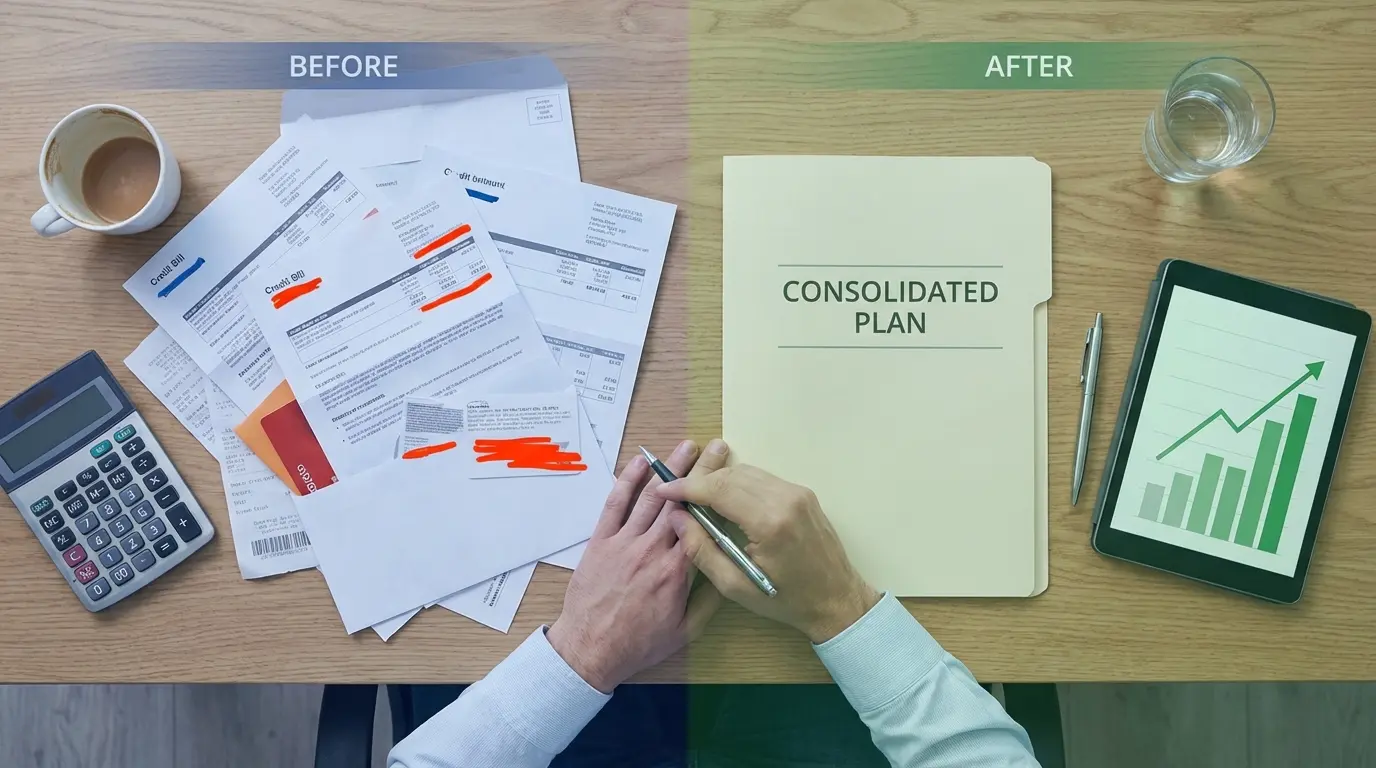
Total household debt in the United States reached a staggering $17.5 trillion during recent economic quarters, leaving many families financially vulnerable. Many consumers find themselves struggling to manage multiple credit cards and personal loans simultaneously while trying to maintain their lifestyle. Understanding the stark contrast of debt consolidation before and after can completely change your financial trajectory and long-term outlook.
Juggling various minimum monthly payments with sky-high interest rates drains your monthly budget at an alarming and unsustainable pace. You might feel like you make payments every single week without reducing the actual principal balance on your accounts. Consolidating those scattered balances into one single payment offers a clear, structured path out of financial chaos and toward debt-free living.
Taking this step requires an honest look at your spending habits and your long-term financial health goals for the future. We will examine the exact changes you can expect throughout this entire financial transformation process and debt payoff journey. Let us look at the reality of your finances prior to taking action and the relief that follows.
Analyzing Your Financial Health: Debt Consolidation Before and After Results
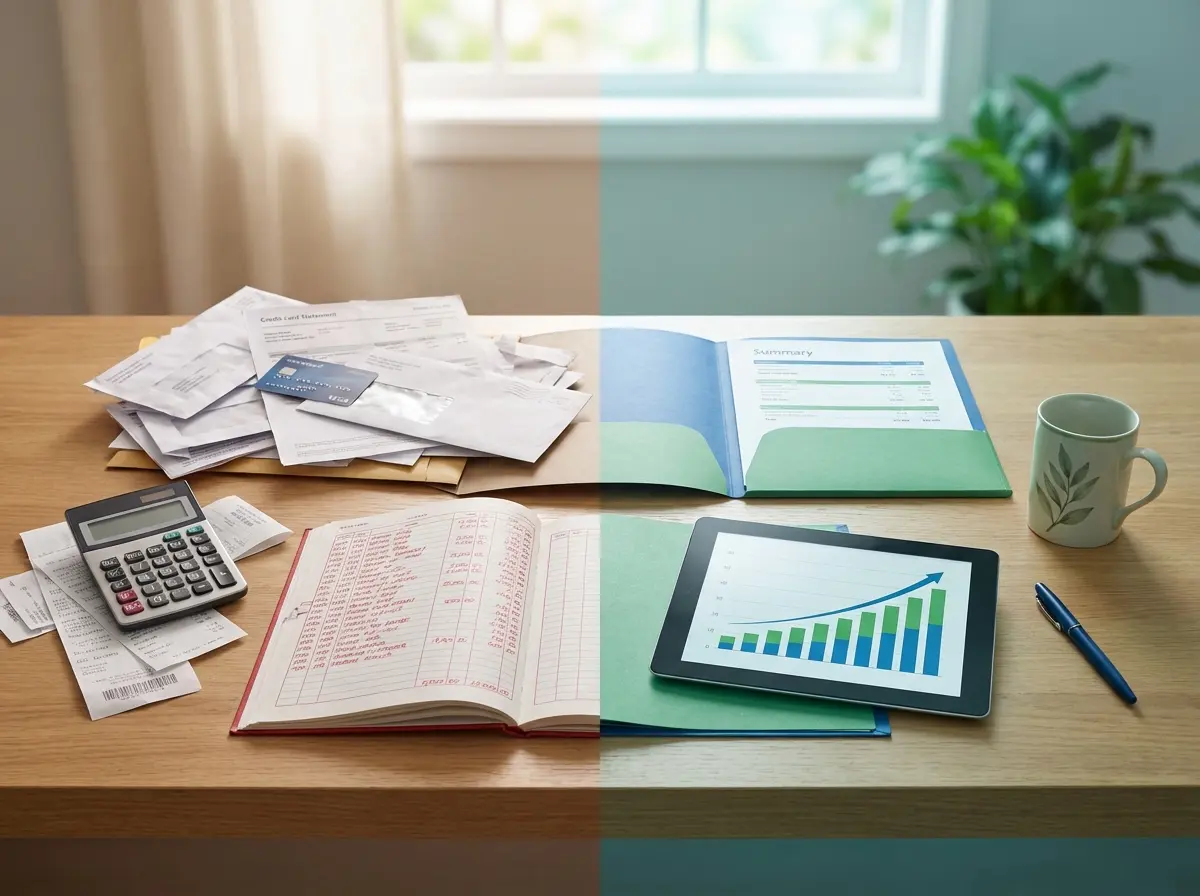
Most consumers begin their debt payoff journey feeling completely overwhelmed by multiple competing monthly financial obligations and high-interest credit card debt. According to recent data from the Federal Reserve, average commercial bank credit card interest rates regularly exceed twenty-two percent for most borrowers. Carrying a substantial balance at these staggering rates means your interest charges compound rapidly every single month, hindering your progress.
You might find yourself logging into five different banking portals just to pay your minimum monthly statements and track various deadlines. This scattered approach increases the likelihood of missing a payment and incurring expensive late fees on your various credit accounts. Examining your debt consolidation before and after situations reveals how much time and money you currently waste on inefficient debt management.
Managing High Interest Rates and Multiple Monthly Payments for Debt Relief
Credit card companies structure their minimum payments to keep you in debt for as long as possible to maximize their profits. If you only pay the minimum amount due, a ten thousand dollar balance could take decades to clear from your record. The majority of your monthly payment goes directly toward interest charges rather than reducing the actual principal balance you owe.
Tracking different due dates across various lenders requires constant attention and excellent organizational skills to avoid damaging your credit score. One minor oversight can lead to a missed payment that negatively impacts your overall credit profile and increases your rates. This constant juggling act leaves very little room in your budget for savings or unexpected emergency expenses that may arise.
The Psychological Toll of Unmanaged Credit Card Debt and Financial Stress
Carrying excessive consumer debt creates a heavy psychological burden that impacts your daily quality of life and overall mental well-being. Financial stress frequently causes sleep disturbances, relationship conflicts, and a pervasive sense of anxiety about the future and your security. Many individuals avoid looking at their bank accounts entirely because the numbers cause too much emotional distress and feelings of failure.
The constant pressure of owing money to multiple creditors can make you feel trapped in a financial corner with no escape. You work hard every single day, yet your bank balances never seem to reflect your actual effort or your career progress. Recognizing this emotional strain is often the catalyst that pushes people toward finding a better financial strategy and debt relief.
- Average credit card interest rates exceed twenty-two percent, making debt payoff incredibly difficult.
- Managing multiple due dates increases the risk of missed payments and expensive late fees.
- High consumer debt creates severe psychological stress that impacts your overall quality of life.
How a Debt Consolidation Loan Changes the Mathematical Equation for Debt-Free Living
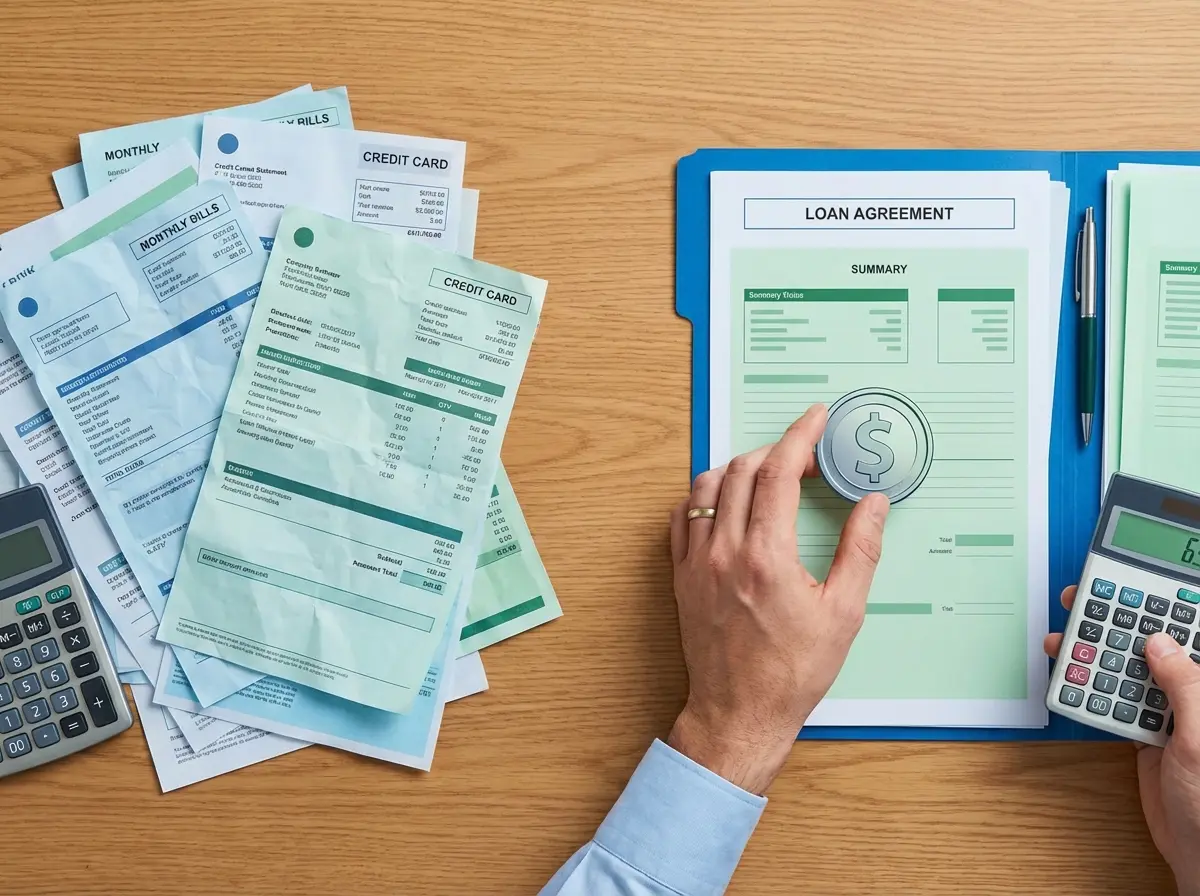
Consolidating your obligations fundamentally alters the mathematical equation of your financial life and your path to debt-free living. You take out a single new debt consolidation loan with favorable terms to pay off all your existing smaller creditors. This process replaces multiple high-interest revolving accounts with one simple installment loan at a lower fixed interest rate for you.
Consider a borrower with fifteen thousand dollars in credit card balances spread across four different high-interest accounts. Paying twenty-four percent interest on that amount costs hundreds of dollars in interest charges every single month without fail. Securing a consolidation loan at ten percent interest instantly stops that aggressive compounding cycle in its tracks and saves money.
Understanding the Financial Mechanics of Debt Relief and Personal Loans
A lower interest rate means more of your monthly payment actually reduces the principal balance you owe each month. You can choose a repayment term that fits your budget, typically ranging from two to seven years for most personal loans. A shorter term saves you more money on interest, while a longer term provides lower, more manageable monthly payments.
Personal loans offer predictable fixed payments that will never fluctuate with broader market economic changes or Federal Reserve decisions. You know exactly how much money you need to budget for your debt payoff every single month without any surprises. This predictability allows you to explore other personal finance strategies with much greater confidence and long-term stability.
Always check for pre-qualification offers that use a soft credit pull before submitting a formal application for a loan. This allows you to compare actual interest rates without temporarily damaging your current credit score during the shopping process.
The Step-by-Step Process of Consolidating Debt for Improved Financial Health
Moving from the chaotic before stage to the organized after stage requires following a specific methodical consolidation strategy for success. You must gather accurate information about your current financial standing before applying for any new credit products or loans. Executing these steps carefully prevents you from making expensive mistakes during the transition period to a new payment structure.
How to Execute a Consolidation Strategy
Calculate Your Total Outstanding Balances
Gather all your recent statements to determine exactly how much money you currently owe across all accounts. Write down the current balance, interest rate, and minimum monthly payment for every single debt you carry.
Review Your Credit Profile
Check your current credit score and report to understand which consolidation products you might actually qualify for right now. Dispute any errors you find before applying for a new personal loan or a balance transfer credit card.
Apply and Disburse Funds
Submit your application for the most favorable loan offer and wait for the final approval decision from the lender. Once approved, direct the lender to pay off your original creditors directly to simplify the process and ensure accuracy.
What to Expect Immediately After Debt Consolidation: The Transition to Financial Freedom
The days immediately following your debt consolidation loan approval often bring a massive sense of psychological relief and newfound financial clarity. You will log into your old credit card accounts and see zero balances across the board for the first time. However, you must understand how this sudden financial shift impacts your credit profile and score in the short term.
Navigating the Short-Term Credit Score Impact of a Debt Consolidation Loan
When you apply for a new loan, the lender performs a hard inquiry on your credit report to assess risk. According to Experian, a hard inquiry usually causes your credit score to drop by a few points temporarily. Opening a brand new account also lowers the average age of your overall credit history, which factors into your score.
Do not panic when you see this minor temporary decrease in your overall credit score during the initial transition phase. The long-term benefits of paying down your debt will far outweigh this initial minor penalty to your credit profile. Your score will begin to recover quickly as you make consistent, on-time payments on the new consolidation loan.
Never close your old credit card accounts immediately after paying them off with a consolidation loan. Closing old accounts reduces your total available credit and severely damages your credit utilization ratio, which can hurt your score.
Realizing Immediate Cash Flow Improvements and Savings Through Debt Management
One of the most noticeable benefits is the immediate improvement in your monthly cash flow and discretionary income. Your single consolidation payment is frequently much lower than the combined minimums of your previous debts and high-interest cards. This extra money remaining in your checking account provides crucial breathing room for your daily living expenses and goals.
You can use this newly freed capital to start building a robust emergency savings fund for future security. Having cash reserves prevents you from relying on credit cards when unexpected car repairs or medical bills arise suddenly. Breaking the cycle of dependence on borrowed money is the ultimate goal of this effective debt management strategy.
Evaluating Long-Term Success: Debt Consolidation Before and After Your Payoff Journey
The true measure of success comes months and years after the initial consolidation process concludes and payments stabilize. Examining your debt consolidation before and after reality shows a clear path toward building actual wealth and financial independence. You must maintain strong financial discipline to fully realize the benefits of your new loan structure and lower rates.
Rebuilding Your Credit Score and Personal Wealth After Consolidation
Your credit utilization ratio makes up thirty percent of your total FICO credit score calculation and overall health. When you consolidate revolving credit card balances into an installment loan, your revolving utilization drops to zero almost immediately. This specific action often results in a significant credit score increase within just a few short months of the change.
A higher credit score unlocks better interest rates for future major purchases like homes or reliable vehicles for your family. As you pay down the installment loan, you steadily increase your overall net worth over time through principal reduction. You transition from paying excessive interest to banks into keeping more of your own hard-earned money for your future.
Avoiding the Re-Borrowing Trap to Maintain Long-Term Financial Freedom
Many borrowers fall into the dangerous trap of running up new balances on their recently cleared credit cards. Without addressing the root causes of your initial overspending, you risk doubling your total debt load very quickly and dangerously. The Consumer Financial Protection Bureau warns that consolidation only works if you change your underlying financial habits permanently.
You must commit to living strictly within your means and following a written monthly budget for all your expenses. Consider removing your credit card numbers from your favorite online shopping portals to reduce impulse purchases and unnecessary spending. Treat your credit cards like cash, and pay off any new small balances in full every single month without fail.
- Expect a minor temporary drop in your credit score due to the hard inquiry and new account opening.
- Keep your old credit cards open with zero balances to maximize your credit utilization ratio improvements.
- Change your underlying spending habits immediately to avoid accumulating new debt alongside your consolidation loan.
Conclusion
Comparing your debt consolidation before and after circumstances highlights the incredible value of taking proactive financial steps for your future. You move from a state of constant stress and high interest charges into a structured, manageable repayment plan with clear goals. This transition requires discipline and focus, but the long-term payoff is absolute financial freedom and peace of mind for you.
Make sure you evaluate all your debt relief options before committing to a specific financial product or debt consolidation loan. Taking control of your balances today puts you on the fast track to a much brighter economic future and stability. Stay focused on your monthly payments, avoid unnecessary new borrowing, and watch your net worth steadily grow over the coming years.
Struggling with multiple payments and high interest rates? Simplify your finances and explore debt consolidation options with Lendwyse today.