

Many people feel trapped in a cycle of minimum payments that barely scratch the principal balance of their mounting debt. If this sounds familiar, you probably have some urgent debt consolidation customer questions regarding the best path toward recovery.
You are certainly not alone in this struggle, as millions of Americans look for better ways to handle their financial obligations every year. Finding clear answers to your consolidation questions is the first step toward regaining control over your personal financial situation.
This comprehensive guide will examine the mechanics of debt consolidation, including how a personal loan impacts your wallet and future. You will learn about the differences between loans, settlement, and management plans. By the end, you will have the knowledge to make a smart choice for your financial future.
What Is Debt Consolidation?

Debt consolidation is a financial strategy where you take out a new loan to pay off multiple existing debts. Instead of juggling several bills with different due dates, you have just one monthly payment to manage. This simplifies your life and often reduces the amount of interest you pay over time.
The primary goal is to lower the average interest rate across all your balances, especially high-interest credit card debt. For example, credit card interest rates can often exceed 20%, which makes paying down the principal difficult. A debt consolidation loan typically offers a lower rate, allowing more of your money to go toward the actual debt.
Most people use a personal loan for this purpose to streamline their finances and reduce their monthly stress. The lender sends the funds directly to your creditors or to your bank account so you can pay them off. Once those accounts are zeroed out, you repay the new consolidation loan in fixed installments over a set period.
- Debt consolidation combines several debts into one single monthly payment.
- The main goal is often to secure a lower interest rate to save money.
- This process simplifies your finances by reducing the number of due dates you must remember.
Debt Consolidation vs. Debt Settlement
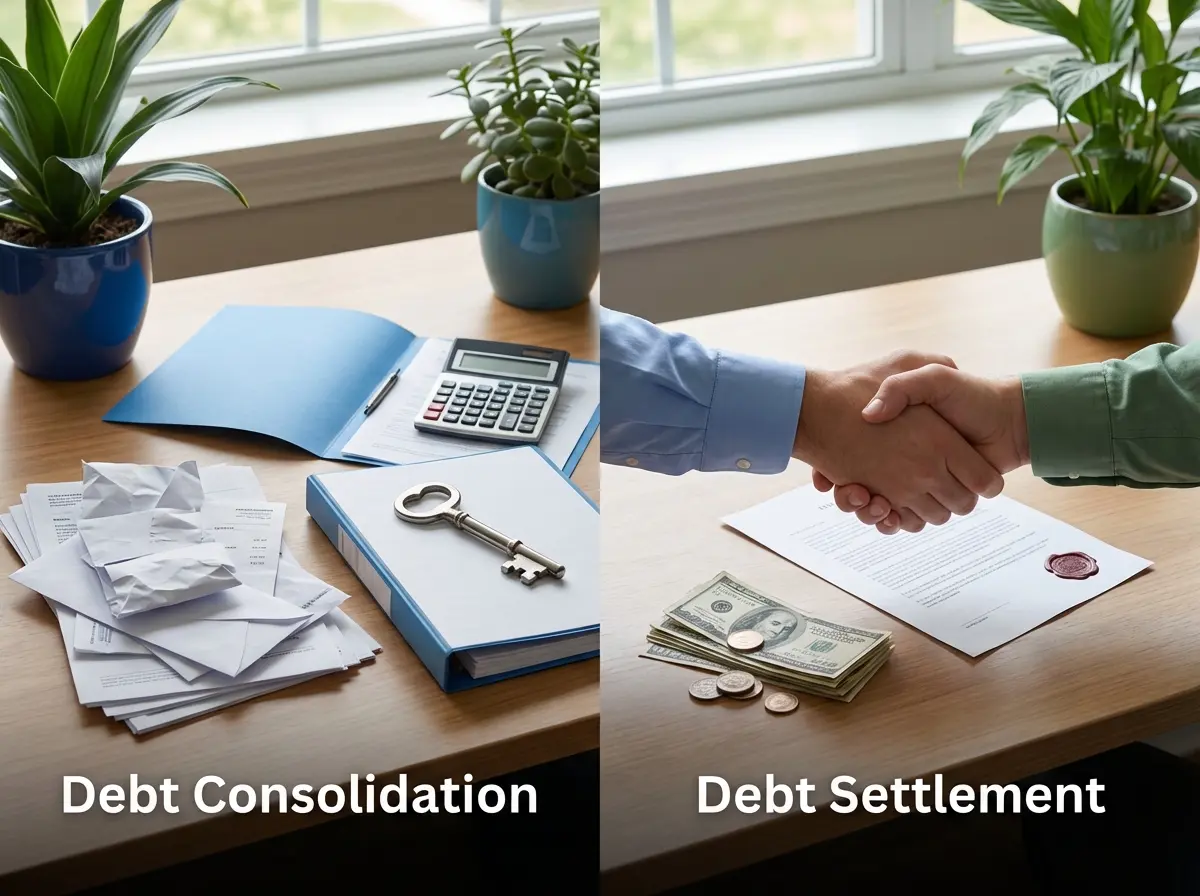
One of the most frequent points of confusion is the difference between debt consolidation and debt settlement. These are two completely different approaches to managing debt.
Consolidation pays your creditors in full, while settlement involves asking them to accept less than what you owe.
A debt settlement company negotiates with your creditors on your behalf. They often advise you to stop making payments to build up a lump sum for negotiations. This approach can severely damage your credit and lead to aggressive collection calls, particularly if you’re dealing with high-stress collections.
Debt consolidation keeps your accounts in good standing because you are paying off the full balance. Debt settlement creates negative marks on your credit history that stick around for seven years.
Always verify which service you are signing up for, as some companies market themselves vaguely as “debt relief.”
A settlement company may charge high fees even if it cannot reduce your debt. Be wary of any organization that guarantees it can make your debt disappear for pennies on the dollar.
Will Consolidation Hurt My Credit Score?
Applying for a debt consolidation loan will trigger a hard inquiry on your credit report. This typically causes a small, temporary drop in your credit score. However, the long-term effects of consolidation are usually positive if you manage the new loan responsibly.
When you use a consolidation loan to pay off maxed-out credit cards, your credit utilization ratio drops significantly. This ratio is a major factor in calculating your score, so lowering it can provide a quick boost. Consistent on-time payments on your new loan will further build your positive history.
The danger lies in running up new balances after you consolidate. If you clear your credit card debt but continue spending on those cards, you will end up with twice the debt. This behavior will ruin your credit score and financial stability.
Types of Consolidation Loans and Options
There are several ways to structure a debt consolidation plan. The right choice depends on your assets, credit rating, and the amount you owe. Here are the most common methods people use to combine their bills.
Consolidating with a Personal Loan
An unsecured personal loan is the most popular vehicle for debt consolidation. You do not need to put up collateral like a house or car. Banks, credit unions, and online lenders offer these consolidation loans with fixed terms ranging from two to seven years.
Balance Transfer Cards
A balance transfer involves moving your high-interest card debt to a new credit card with a 0% introductory APR. This works well for smaller balances that you can pay off within the promotional period, usually 12 to 18 months. Be aware that transfer fees usually apply, costing around 3% to 5% of the amount moved.
Home Equity Loans
Homeowners might consider a home equity loan or line of credit. These loans use your house as collateral, which often secures a much lower interest rate compared to unsecured options. However, this is risky because you could lose your home if you fail to make the payments.
Credit Counseling and Debt Management Plans
If you cannot qualify for a new loan, a debt management plan might be the answer. You work with a non-profit credit counseling agency to repay your debts through structured guidance. The counseling agency negotiates lower interest rates with creditors and you make one monthly payment to the agency.
- Personal loans are the most common unsecured option for consolidating debt.
- Balance transfers work best for smaller debts you can pay off quickly.
- Debt management plans offer professional help without requiring a new loan.
Understanding Loan Rates and Costs
The success of your debt consolidation effort depends heavily on the loan rate you secure. If the new rate is not significantly lower than your current average, the process may not be worth the effort. Lenders determine your loan rate based on your creditworthiness, income, and debt-to-income ratio.
A fixed loan rate stays the same for the life of the loan, which makes budgeting easier. Variable rates might start lower but can increase over time, potentially raising your monthly payment unexpectedly.
Always check if the loan rate includes an origination fee, which is a charge for processing the new application.
Sometimes, extending the loan term to lower your monthly payments can result in paying more total interest, even with a lower loan rate. You must calculate the total cost of the loan, not just the monthly impact. A good debt consolidation loan should improve your immediate cash flow without costing you a fortune in the long run.
If you have excellent credit, you might qualify for a loan rate under 10%. Those with fair credit might see a loan rate closer to 15% or 20%. If the offered loan rate is higher than your credit cards, a debt consolidation loan is likely the wrong tool for you.
What Debts Can I Include?
Most debt consolidation loans are designed for unsecured debt. This category includes bills that are not tied to physical assets like a house or car.
Credit card debt is the most common type of liability people choose to consolidate.
You can also include medical bills and other forms of healthcare debt in your consolidation process to manage costs more effectively. These expenses often come with high interest or confusing payment terms, making them ideal candidates for financial simplification.
Personal loans from other lenders can also be rolled into a new, larger loan if the terms are better.
Student loans are technically eligible for some private consolidation loans, but you should proceed with caution. Consolidating federal student loans into a private loan means losing federal protections like income-driven repayment and forgiveness options. Generally, it is better to keep student debt separate from consumer financial debt like credit cards.
Most lenders will not allow you to use a debt consolidation loan to pay off secured debts like a mortgage or auto loan. The loan payoff process is strictly for debts that do not have collateral attached. Combining multiple unsecured debts is the standard practice.
Is Debt Consolidation Right for You?
Deciding to pursue debt consolidation requires an honest look at your financial health and a personal loan evaluation. This strategy works best for people who have a steady income and a plan to stop overspending. If you’re dealing with a temporary cash flow problem but have good credit, this can be a lifesaver.
However, debt consolidation is not a magic fix for poor spending habits. If you clear your credit card balance and immediately start charging new items, you will end up in a worse position. You must commit to living within your budget once the consolidation is complete.
Working with Professionals
If you are overwhelmed, speaking with a credit counseling professional can help you make an informed decision. Non-profit credit counselors can review your budget and suggest a management plan if a loan isn’t feasible. They can also help you understand the privacy policy and fees associated with any debt management program.
Be careful when hiring a debt settlement company or a for-profit debt consolidation program. Research their reputation and read reviews to avoid scams. A legitimate consolidation program will be transparent about fees and will not advise you to stop paying your bills.
Check your credit report for errors before applying for any consolidation loans. Removing incorrect negative marks can boost your score and help you qualify for a lower interest rate.
Debt consolidation serves as a powerful tool when used correctly. It simplifies your multiple debts into one manageable payment and can save you thousands in interest. By understanding the consolidation process and avoiding the pitfalls of debt settlement, you can chart a path toward a debt-free life.
Take the time to compare debt consolidation loans from multiple lenders. Look at the APR, fees, and repayment terms side by side. Making a careful choice now will provide relief and stability for years to come.
- Consolidation is best for those with steady income and decent credit scores.
- Avoid running up new credit card balances after consolidating your debt.
- Consulting a non-profit credit counselor can clarify your options before you commit.
Conclusion
Debt consolidation offers a practical way to simplify your finances and reduce interest costs. It requires discipline and a clear understanding of the terms, but the rewards are significant. By converting high-interest credit card debt into a single, lower-rate loan, you can pay off your balance faster.
Remember that debt consolidation is different from debt settlement. One protects your credit score, while the other can cause long-term damage. Always read the fine print on any debt consolidation loans you consider.
Take control of your financial situation today. Review your credit card balance, check your rates, and see if a consolidation loan makes sense for you. With the right plan, you can stop worrying about monthly payments and start building a secure future.
Get the loan you need without the guesswork. With LendWyse, you’ll see multiple offers at once, making it easier to choose and easier to save.